Built-in redundancy
Three to five plies mean a single failure point rarely becomes a leak right away.
Flat roof system
Layers of hot asphalt and felt under a coat of gravel. Many Edmonton buildings still have one, and many of them still have years left.
Overview
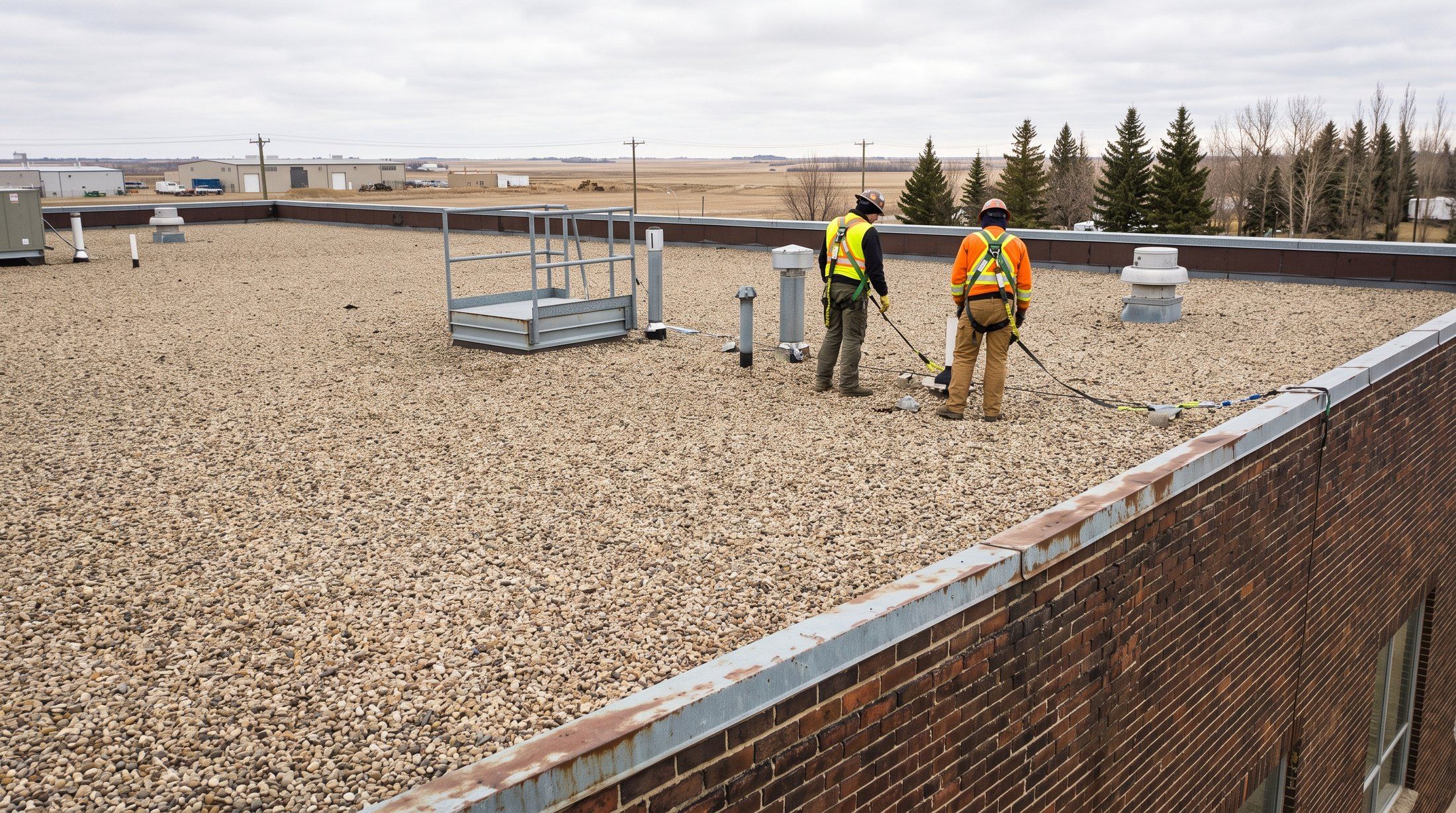
Built-up roofing, often called tar and gravel, covers a large share of Edmonton's older commercial and industrial buildings. A built-up roof (BUR) is made of three to five plies of roofing felt laid in hot asphalt, finished with a flood coat and a layer of embedded gravel. The plies give redundancy, and the gravel protects the asphalt from UV and hail.
New built-up roofs are far less common than they were. Most owners now repair and maintain the BUR they have, then replace it with 2-ply SBS when the time comes. We will tell you plainly which stage your roof is at. Rain Roofing repairs and maintains existing built-up roofs and installs new BUR where a spec calls for it.
Three to five plies mean a single failure point rarely becomes a leak right away.
The gravel surface shields asphalt from UV and absorbs much of a hailstone's impact.
We tell you whether your BUR is worth repairing or ready for replacement, with cores to back it up.
Built-up roofing is the oldest commercial low-slope system still in service. Its strength comes from layering: each ply of felt is saturated and sealed in asphalt, so water has to get through several waterproof layers before it reaches the insulation.
BUR does some things well here. The gravel protects the asphalt from UV and hail, and the layered plies resist the occasional puncture. Many Edmonton BUR roofs have lasted decades.
Freeze-thaw is its weak point. As the asphalt ages it dries out and cracks in a pattern roofers call alligatoring, and water that gets in freezes and widens the cracks. Gravel also washes toward drains during spring melt, blocking them and leaving bare spots. Felt flashings stiffen in the cold and split at corners.
An existing BUR in reasonable shape is often worth maintaining. Repairs are inexpensive compared with replacement, and a roof with dry insulation and sound plies can give years more service.
New BUR makes sense mainly where a specification requires it or where an addition should match an existing roof. For most re-roofs, 2-ply SBS gives similar redundancy with less weight, no kettle fumes over an occupied building, and easier leak repair. That is what we recommend for most Edmonton BUR replacements.
Older built-up roofs need two checks before any tear-off. Some were built with coal tar pitch rather than asphalt, which needs different repair materials and handling. Roofing felts, mastics and flashing cements from past decades can contain asbestos, so samples are tested before demolition starts and the schedule accounts for the result.
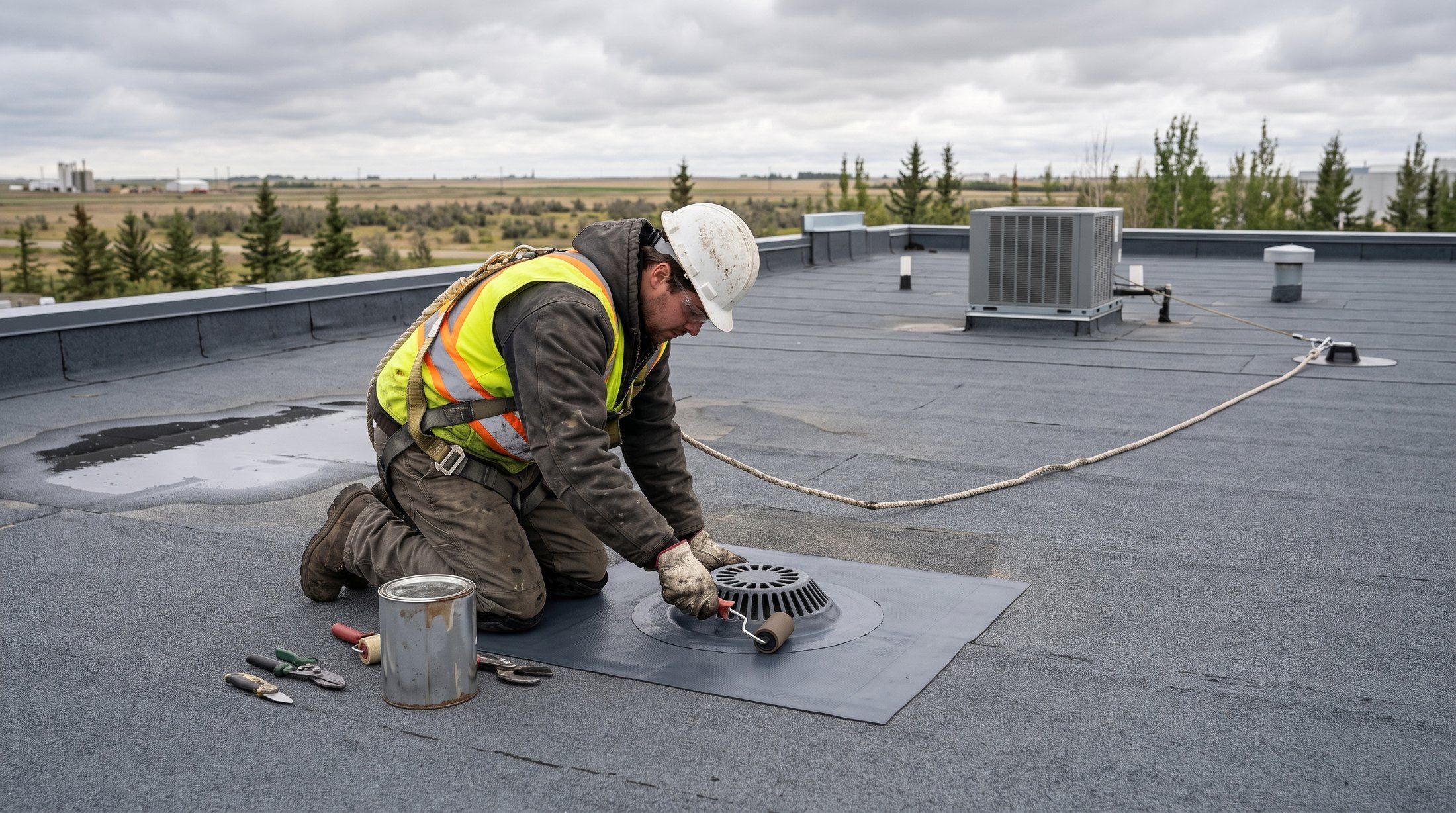
Spring and fall inspections should check for bare spots where gravel has scoured away, blisters, alligatored asphalt, and cracked flashings. Gravel that has drifted into drains and scuppers needs clearing before freeze-up. Bare areas get a fresh pour of asphalt and gravel. Pitch pockets around penetrations dry out and need refilling every few years.
Manufacturer warranties on new built-up roofs typically run 10 to 20 years where they are still offered, and fewer manufacturers support BUR than in the past. For an existing roof, a repair warranty covers the work done. When a BUR is replaced with SBS, the full SBS warranty range opens up, along with a Rain Roofing workmanship warranty.
The gravel hides the membrane, so leaks often show up inside long after the damage started, and water can travel between plies before it drips. A moisture survey tells you more than a walk-over.
Inside the assembly
Every layer has a job. Skip one, or install it carelessly, and the roof fails early. This is the assembly we build and warranty.
Process
We take cores to count plies, check for wet insulation and confirm the deck before recommending repair, recover or replacement.
On a new BUR, a vapour retarder and insulation go down, with tapered insulation where drainage needs correcting.
Felts are laid in shingled layers, each set in hot asphalt from a kettle, building three to five plies of waterproofing.
Curbs, walls and penetrations are flashed, usually with SBS membrane, which handles movement better than felt.
A heavy flood coat of hot asphalt is poured over the top and gravel is broadcast into it while it is still hot.
Warranty
Our workmanship, an independent ARCA certificate, and the manufacturer's system warranty, each backed by a different party.
Questions
Many are. If the plies are sound and the insulation is dry, a BUR can keep working for years with basic maintenance. Age alone is not a reason to replace it.
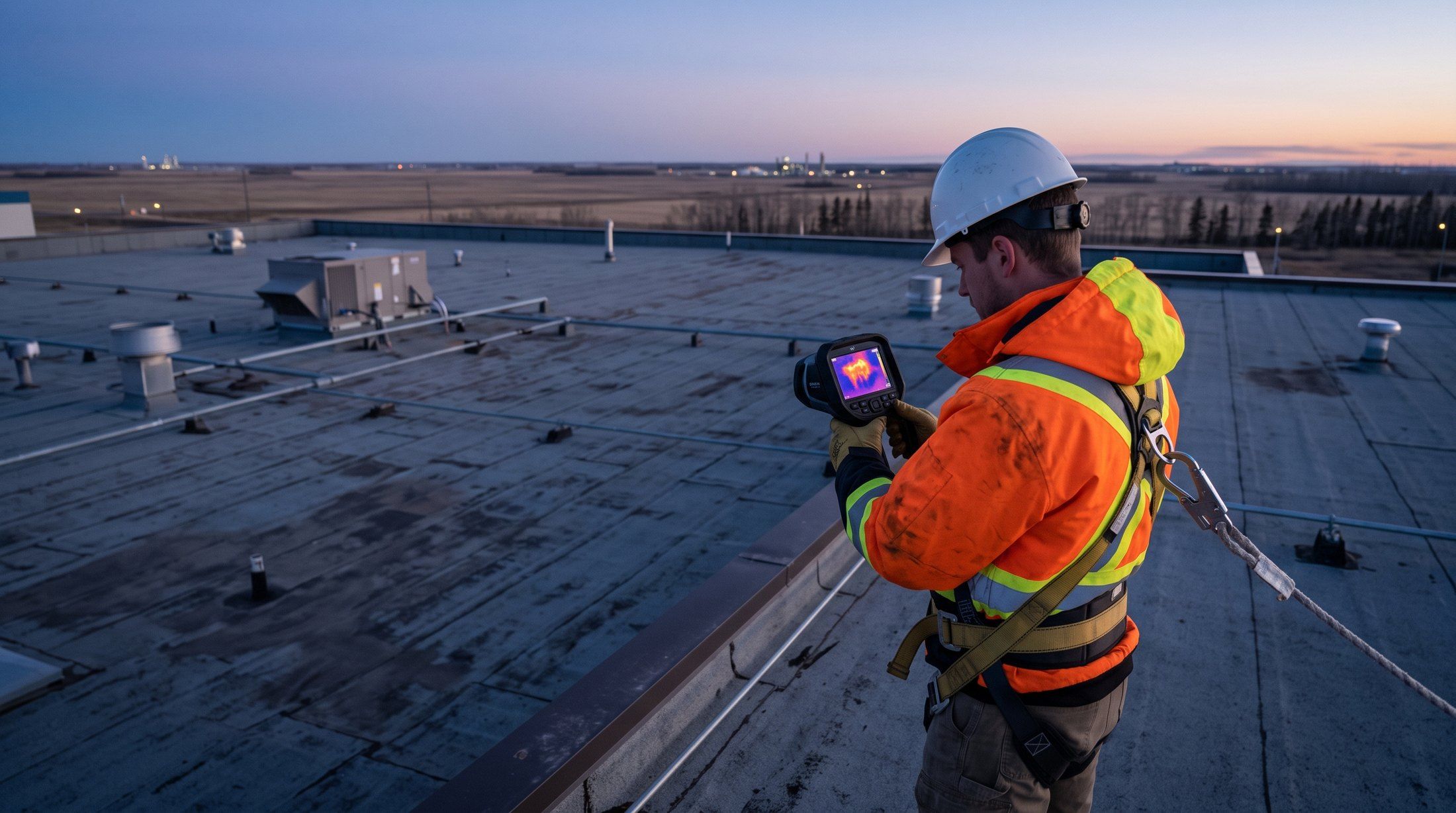
The gravel hides the surface, and water can travel between plies before it shows up inside. We use infrared or moisture surveys and test cuts to trace leaks instead of guessing.
Sometimes. The loose gravel is removed, the surface prepared and a cover board installed before the new membrane. It only works if the existing insulation is dry, which cores will confirm.
For most Edmonton buildings, 2-ply SBS. It gives similar redundancy and hail resistance with less weight and easier repairs. PVC is the better choice where grease or chemicals reach the roof.
Yes, where a specification calls for it or an addition needs to match. For most re-roofs we price 2-ply SBS alongside it, because it usually offers the same protection with less weight and a shorter install.
Keep reading
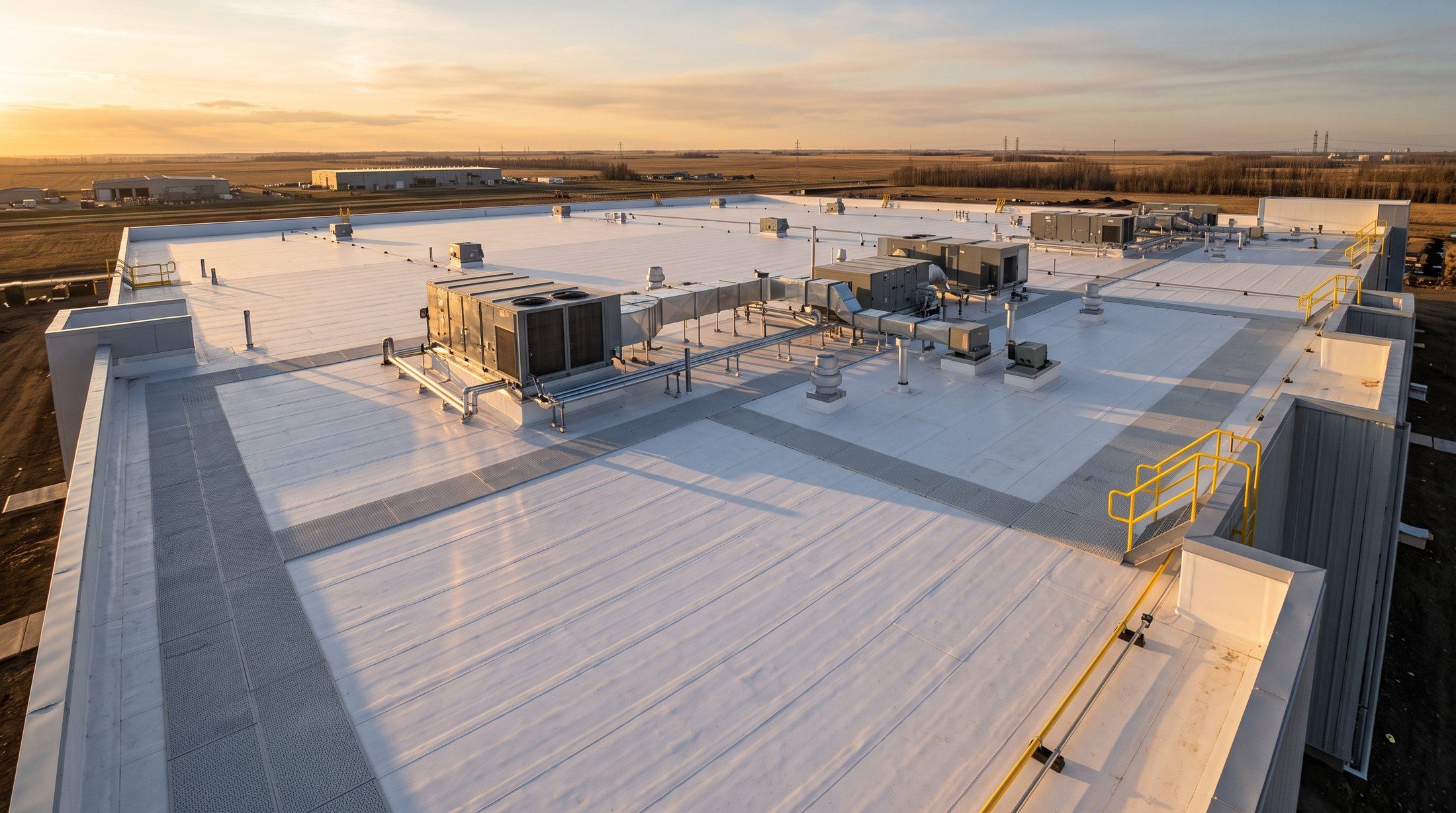
Flat roof systems
Compare every commercial flat roof system and see which one suits your building.
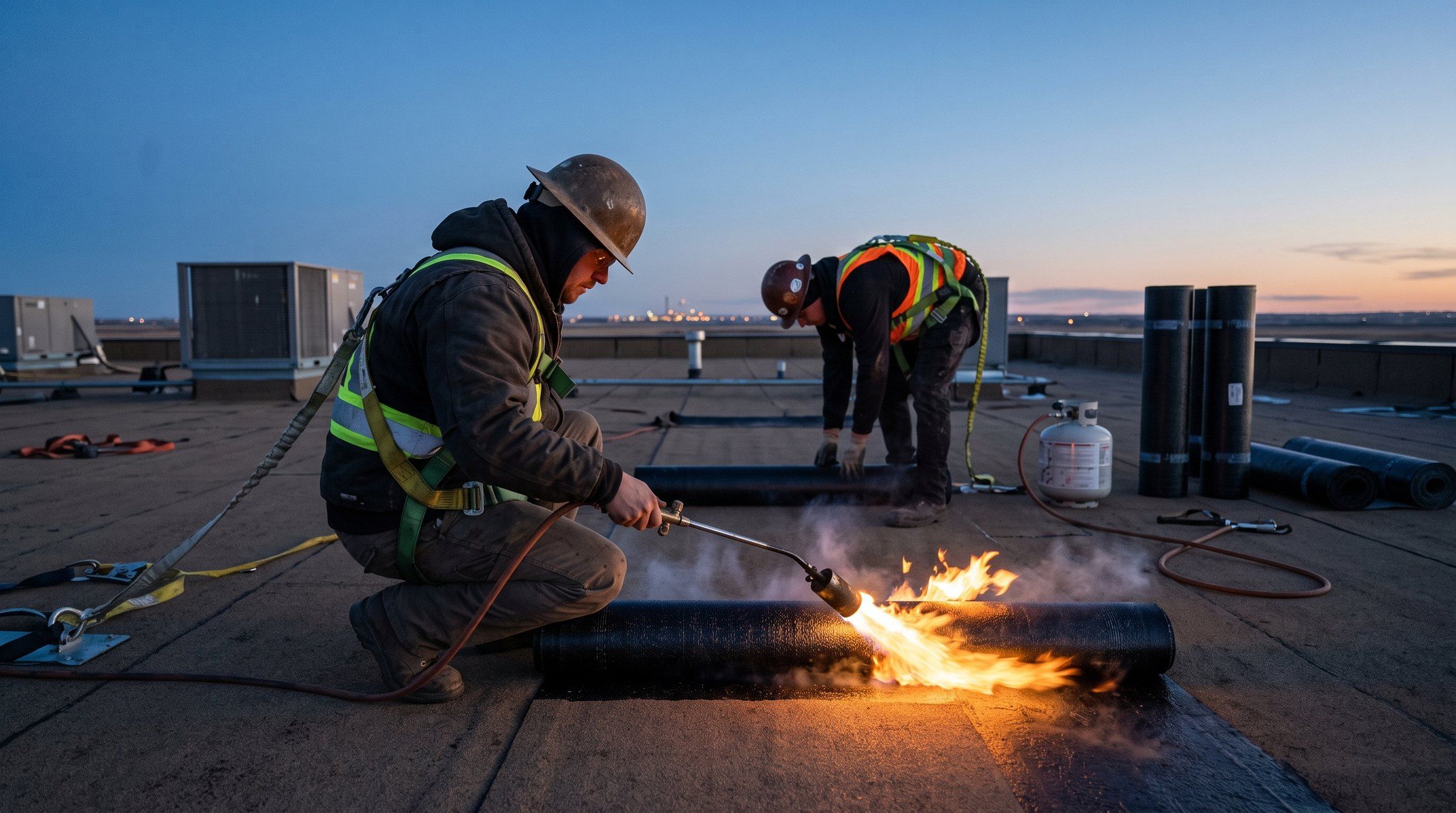
Flat roof system
Two-ply modified bitumen, the proven Alberta standard for hail, cold and rooftop traffic.
Service
Infrared and moisture surveys that show where a roof is wet, so you repair or replace only what needs it.
Send us drawings, a spec or just an address. You get a clear scope, a written warranty and a roofer who answers the phone in a storm.