Tenant-aware scheduling
Notices, quiet hours and protected entrances agreed before we start.
Industry: retail and commercial
Tenants, opening hours and a roof that has collected twenty years of other people's equipment. We sort it out without closing the doors.
The roof behind the operation
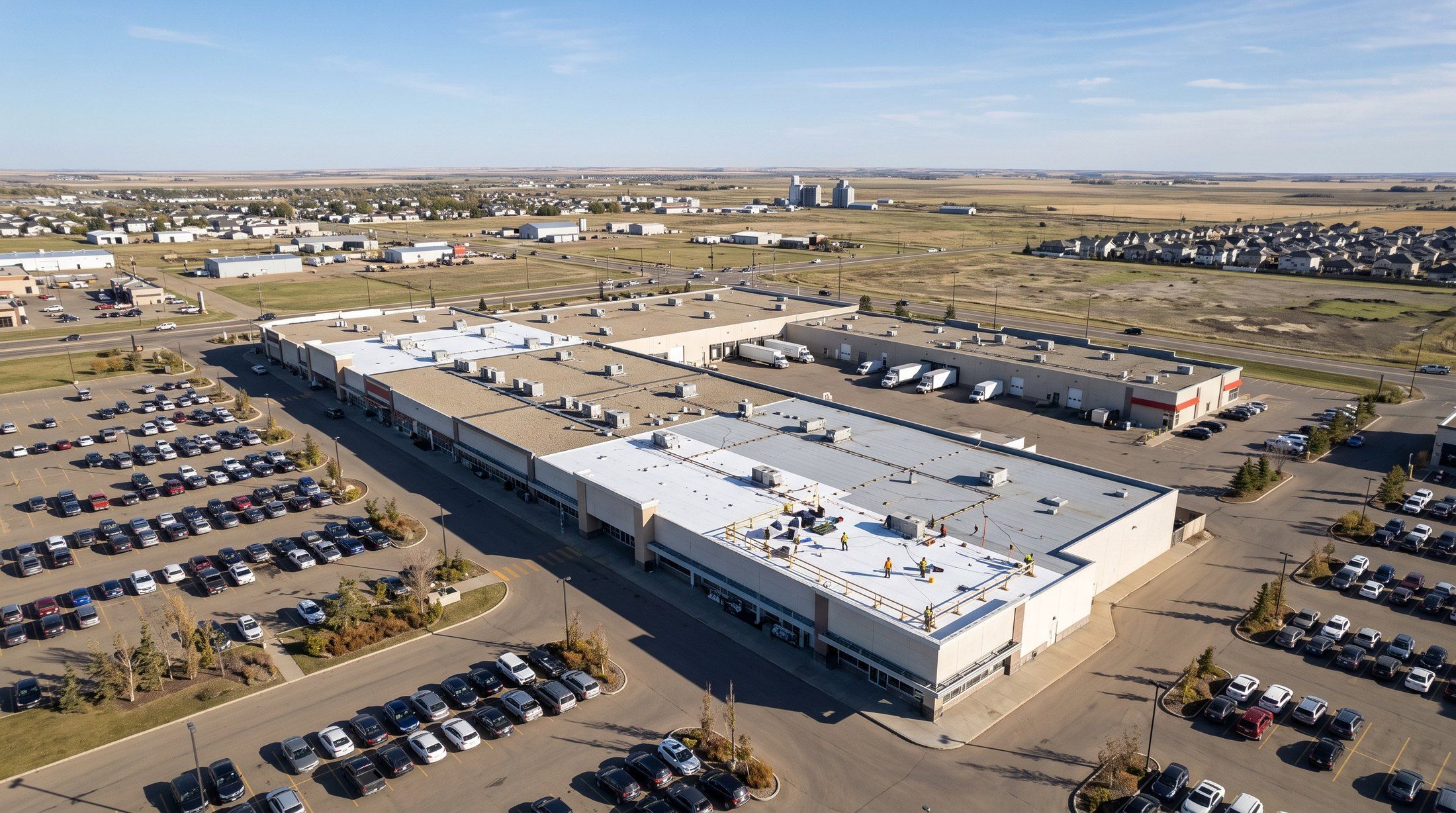
Retail plaza roofing in Edmonton is as much about tenants as it is about membrane. A leak over a restaurant closes a kitchen. A leak over a dental office cancels a day of patients. On a multi-tenant building, every complaint lands on the property manager, whoever caused the problem.
Rain Roofing works on strip plazas, shopping centres, office buildings and mixed-use commercial properties across the Edmonton region. We plan roof work so tenants keep trading and the property manager gets fewer calls, not more.
Notices, quiet hours and protected entrances agreed before we start.
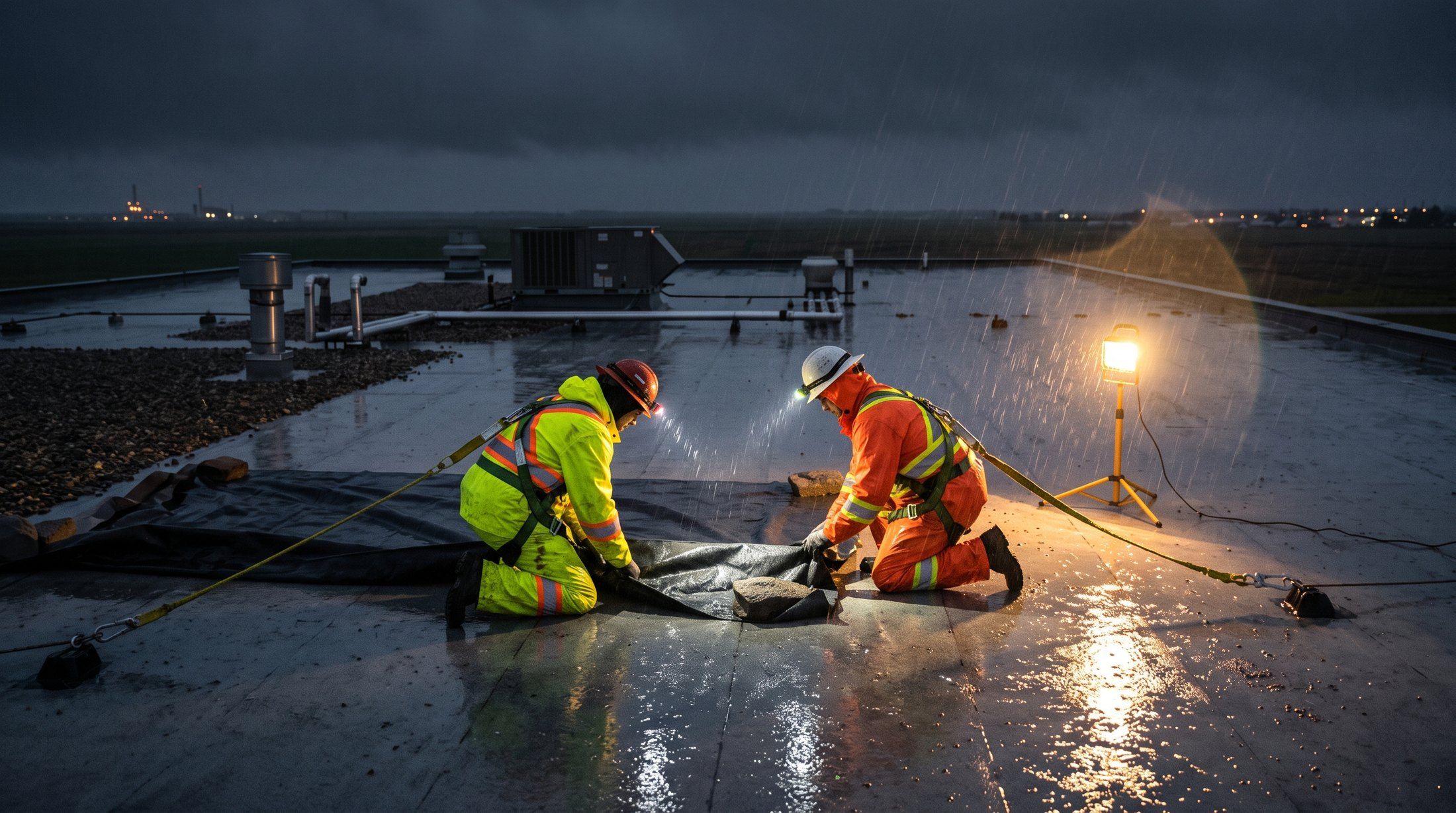
24/7 emergency response with crews on site within 4 hours.
Photos and repair locations kept on file for the next call.
Commercial properties change tenants often, and each tenant tends to leave something on the roof.
Before work starts we ask for a tenant list, opening hours and any special concerns: kitchens, medical offices, server rooms, displays near the ceiling. We give the property manager a notice to send tenants, with dates, hours and a contact name.
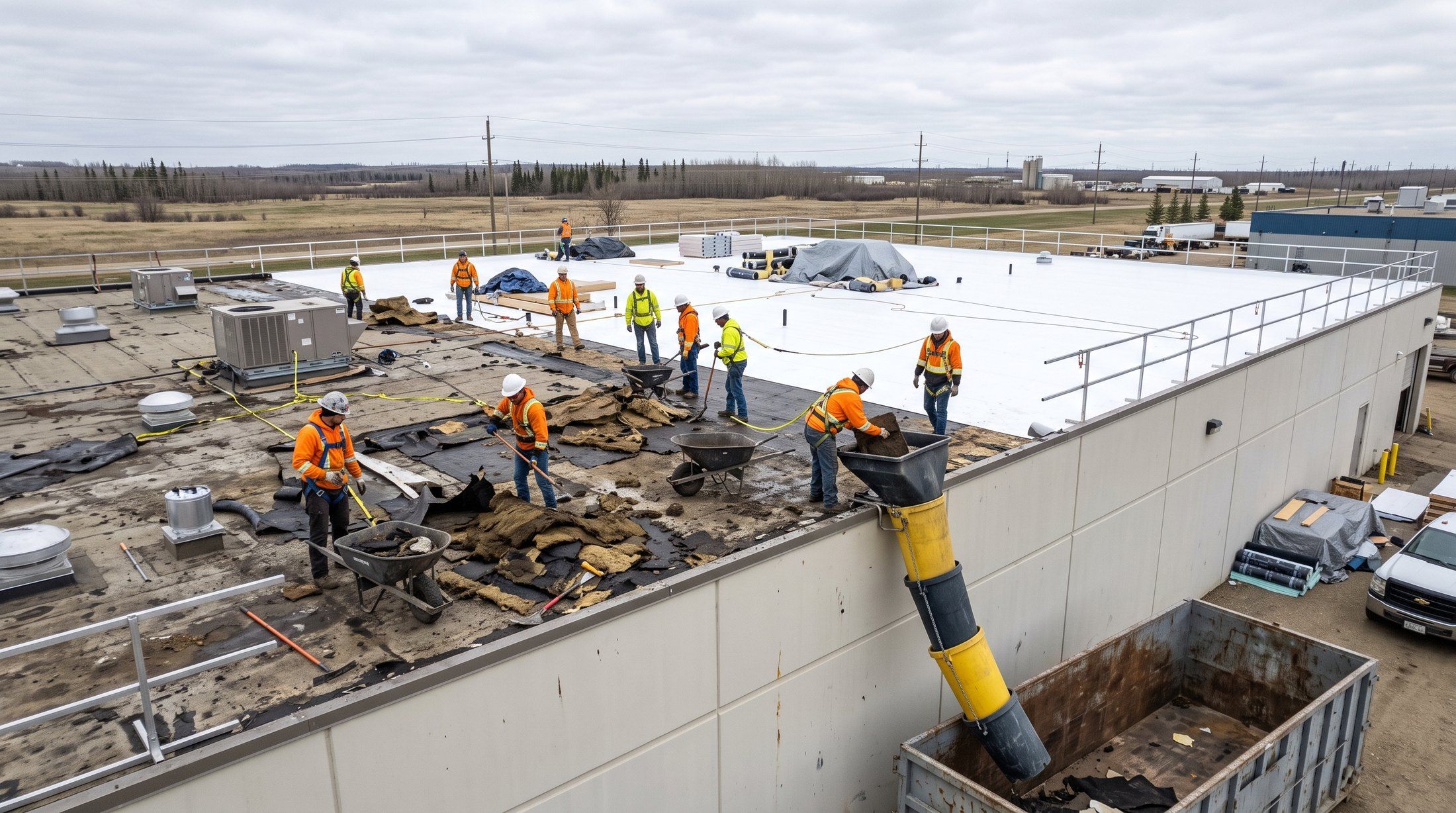
Noisy tear-off and crane lifts are scheduled before opening or after close where needed. We keep entrances, patios and fire exits clear, protect parking areas and leave every section watertight at the end of each day. Restaurants and medical tenants get advance warning of any rooftop equipment shutdown.
On a multi-tenant building, the drip in one unit often starts over the next one. Water gets in at a failed flashing, runs along the deck flutes or the top of the insulation, and drops wherever the ceiling gives way first. Patching the roof directly above the stain fixes nothing, and the tenant calls again after the next rain.
We trace the path instead. That can mean a careful visual survey, opening the roof at suspect details, or an infrared or moisture survey that maps wet insulation across the whole roof. The repair goes where the water enters, and the report shows the property manager which tenant space it came from.
Most commercial buildings in the region suit one of a few approaches, and many plazas end up with more than one.
Commercial properties are sold, refinanced and insured, and the roof is always one of the first questions. We keep a record of each roof we work on: photos, a roof plan with repair locations, product data and warranty documents. When a tenant reports a leak, we can see what was done last time and where.
For owners planning capital budgets, we prepare roof condition reports that rate each section and give a realistic replacement timeline, so the roof shows up in the budget before it shows up in a tenant's ceiling.
Questions
Yes, in almost every case. We phase the work, schedule the noisiest tasks outside store hours where needed, and keep entrances open and protected throughout.
Who pays depends on the lease. What we can do is document the damage with photos and a written report, repair it properly, and give you what you need to recover the cost.
Yes. Grease breaks down asphalt and some rubber membranes, and it is one of the most common causes of early failure on plaza roofs. Grease containment at the fan and a resistant membrane around it usually solve the problem.
Usually, yes. An unused curb is a flashing that can leak with no benefit to anyone. We remove it, deck over the opening and patch the membrane, often as part of other repair work.
Yes. A portfolio maintenance program covers several properties on one schedule, with a separate report and photo record for each building.
Keep reading
Industries we serve
How we plan flat roof work around warehouses, plants, industrial sites, institutions and retail properties.
Service
Permanent repairs on every common commercial membrane, traced to the source and documented with photos.
Service
A 24/7 emergency line, a crew on site within 4 hours and a permanent repair that follows.
Send us drawings, a spec or just an address. You get a clear scope, a written warranty and a roofer who answers the phone in a storm.