Survey first
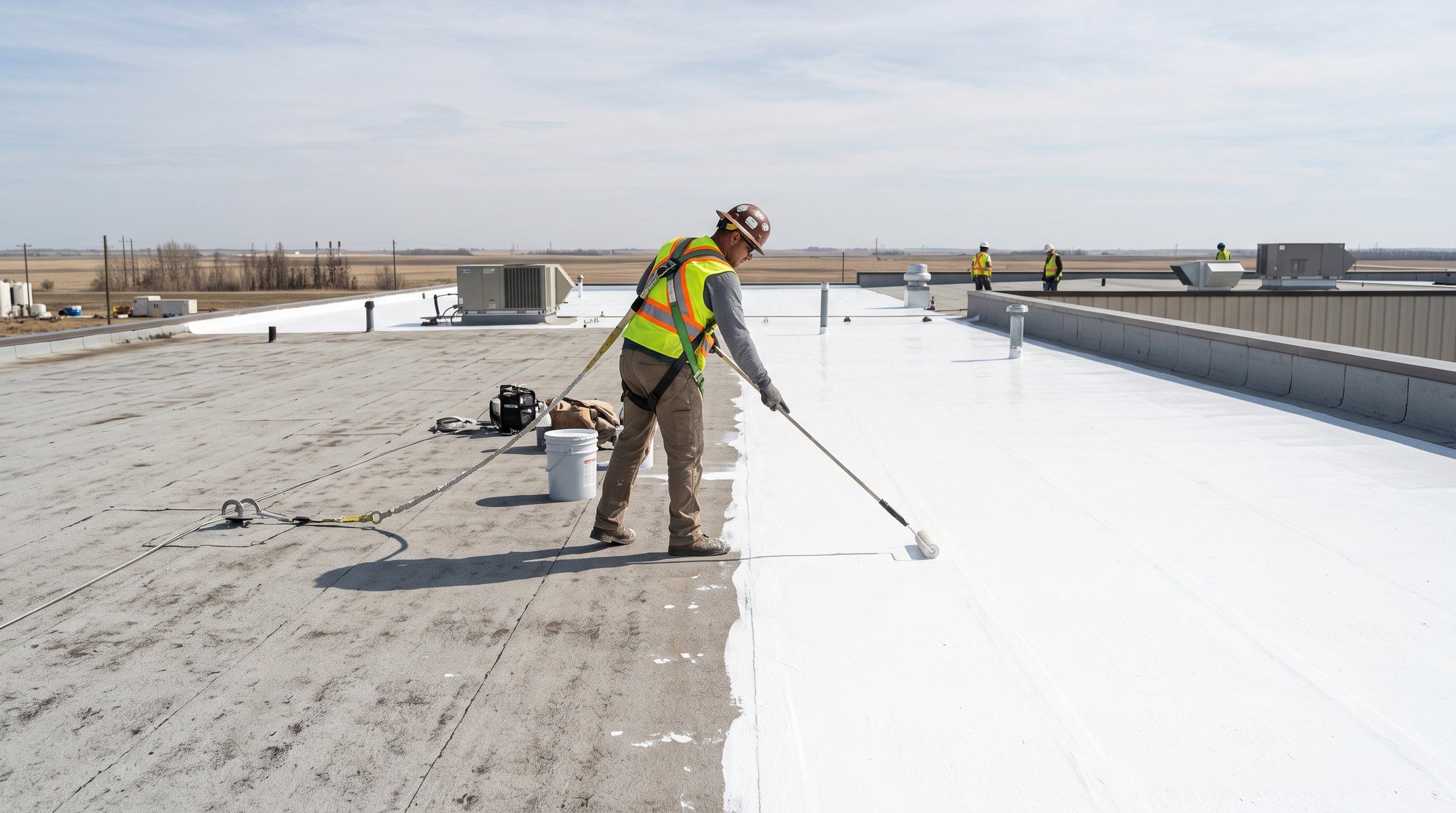
A moisture survey confirms the roof is dry enough to coat. We will not coat over wet insulation.
Service
A coating can add years to a sound, aging roof for a fraction of replacement cost. On the wrong roof it wastes money. We test first and tell you which you have.
Overview
Roof restoration coating in Edmonton gets sold as a cure for every tired flat roof. It is not. A coating is a liquid-applied layer that renews the weathering surface of an existing roof. Applied to the right roof, with proper preparation, it can extend service life by years and defer a major capital cost. Applied over wet insulation or a failing membrane, it hides problems instead of solving them.
We recommend coatings when the roof is a genuine candidate, and we say so plainly when it is not.
Every coating proposal we write starts with a moisture survey and a close inspection of seams and flashings. If the roof passes, you get a coating system matched to your membrane and drainage, applied at a measured thickness and backed by documentation. If it does not, you get the evidence and a clear explanation of the better option, whether that is targeted repairs or a re-roof.
A moisture survey confirms the roof is dry enough to coat. We will not coat over wet insulation.
Silicone, acrylic, polyurethane and SBS-compatible coatings each suit different membranes and conditions.
Cleaning, seam and flashing repairs and primer where required, before any coating goes down.
Coating warranties are available from the manufacturer, with terms tied to the system and thickness applied.
The best candidates are roofs that are aging but still basically sound: the membrane is weathered, seams are mostly intact, and the insulation underneath is dry. In those cases a coating renews the surface, seals small cracks and can reflect heat, for a fraction of the cost of replacement and with no tear-off.
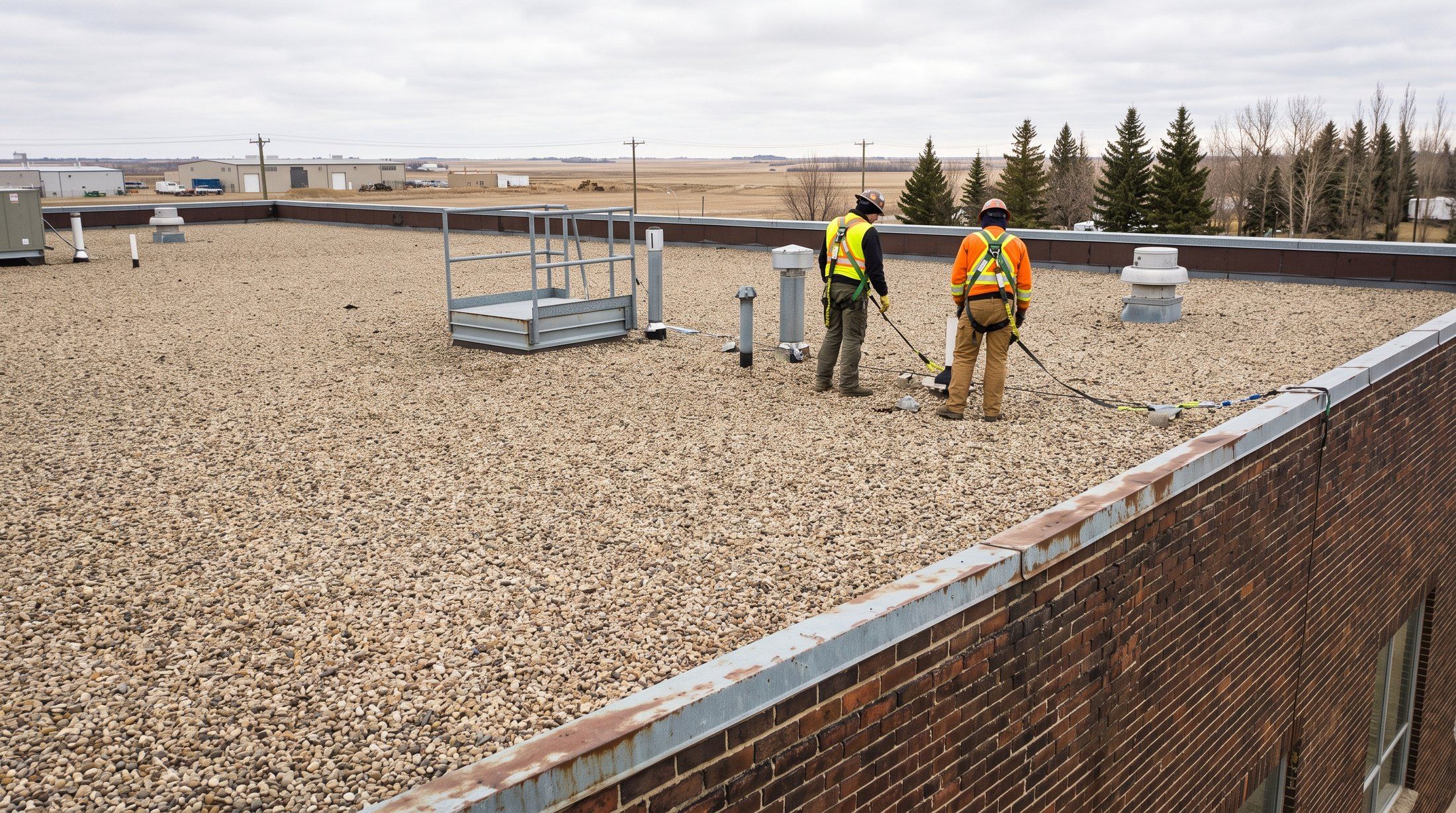
A coating cannot dry out wet insulation, fix a deck problem or hold together a membrane that is failing across the whole roof. Coating over those conditions traps the problem and usually means paying for the coating and then a full replacement. Coatings are also poorly suited to heavy, chronic ponding unless the product is specifically rated for it, and gravel-surfaced roofs need the gravel removed and the surface prepared first, which changes the economics.
Silicone handles ponding and UV well but generally only accepts more silicone for future recoats. Acrylic is economical and reflective but should not sit under standing water. Polyurethane is tougher against foot traffic and impact. Modified bitumen coatings suit SBS and built-up roofs. Our recommendation depends on the existing membrane, drainage and how the roof is used.
Edmonton's short season matters too. Coatings need dry weather, surface temperatures within the product's limits and time to cure before rain or frost, so we plan application windows carefully.
Most coating failures are adhesion failures, and most adhesion failures come from skipped preparation. Before any coating goes down, we bring the roof to a condition the manufacturer will warranty.
Process
We inspect the membrane and run a moisture survey to confirm the roof is dry and sound enough to coat.
If coating is a good fit, we propose a system and thickness. If not, we explain why and what the alternatives are.
Wet areas are replaced, seams and flashings repaired, and the surface cleaned and primed as the manufacturer requires.
Coatings go on in dry weather within the manufacturer's temperature range, at measured thickness.
Thickness readings, photos and the warranty are added to your roof's file.
Questions
It depends on the product and the thickness applied. Manufacturer warranties on coating systems are generally tied to applied thickness, and a coated roof can often be recoated later to extend it further.
Usually much cheaper up front, with no tear-off or disposal. It is only good value on a roof that is dry and sound. That is why we survey before we recommend one.
We repair the leaks first, replace any wet insulation, then coat. A coating is not a leak repair on its own.
Light-coloured reflective coatings can reduce rooftop heat gain in summer, which can help buildings with significant cooling loads. In Edmonton the benefit varies by building, so we do not lead with it.
Rarely. There is no tear-off, so the roof stays closed throughout. Some coatings have an odour during application, so we plan around air intakes and occupied areas and agree on timing with you.
The same way as any flat roof: spring and fall inspections, clear drains and prompt repair of any damage. Many coating warranties require that maintenance, and our program reports give you the record.
Keep reading
Service
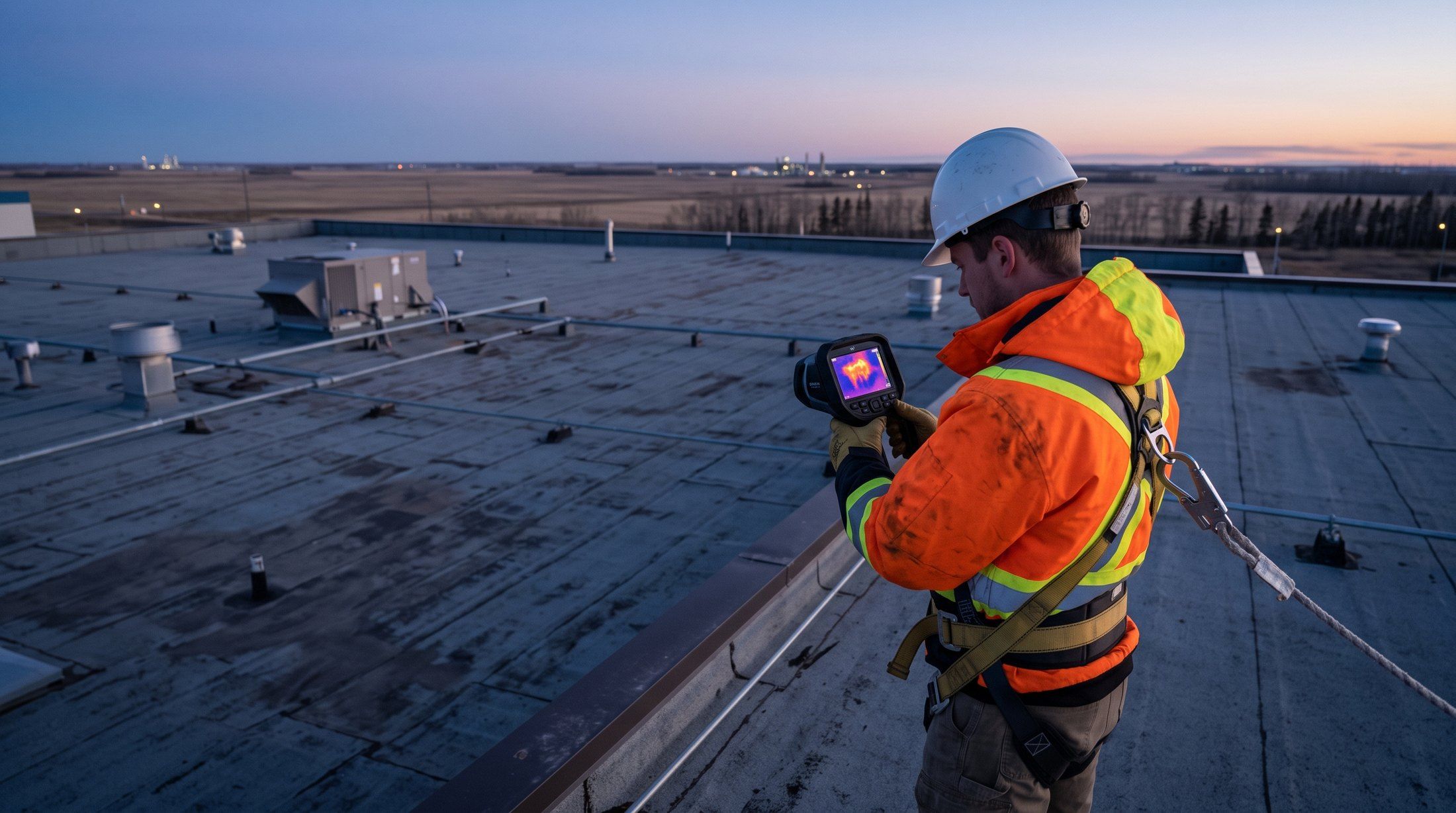
Infrared and moisture surveys that show where a roof is wet, so you repair or replace only what needs it.
Service
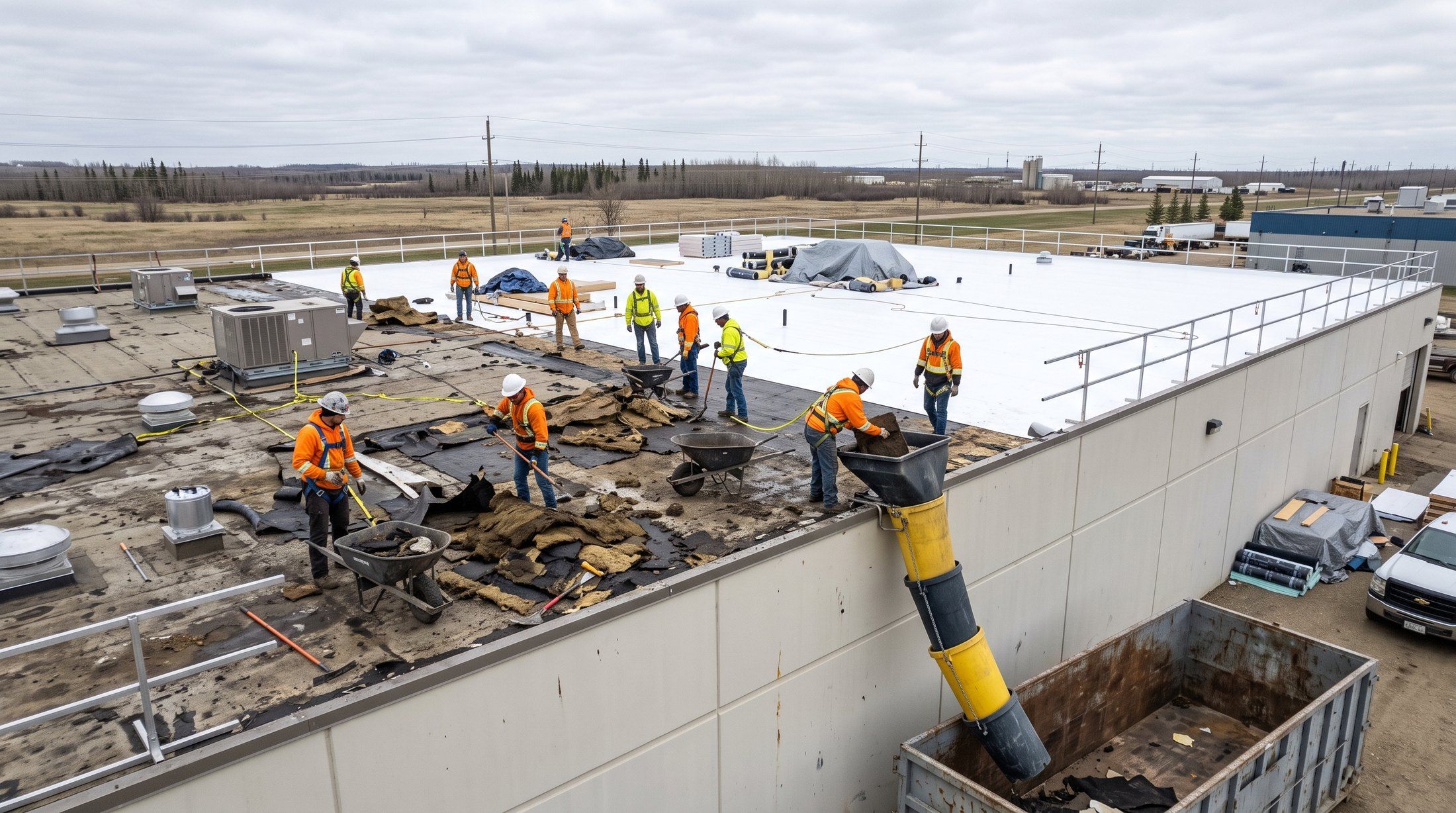
Full tear-off or recover over a dry roof, chosen on survey evidence and scheduled around your operations.
Flat roof system
Repair, maintenance and replacement for the tar and gravel roofs on older Edmonton buildings.
Send us drawings, a spec or just an address. You get a clear scope, a written warranty and a roofer who answers the phone in a storm.