Membrane protected
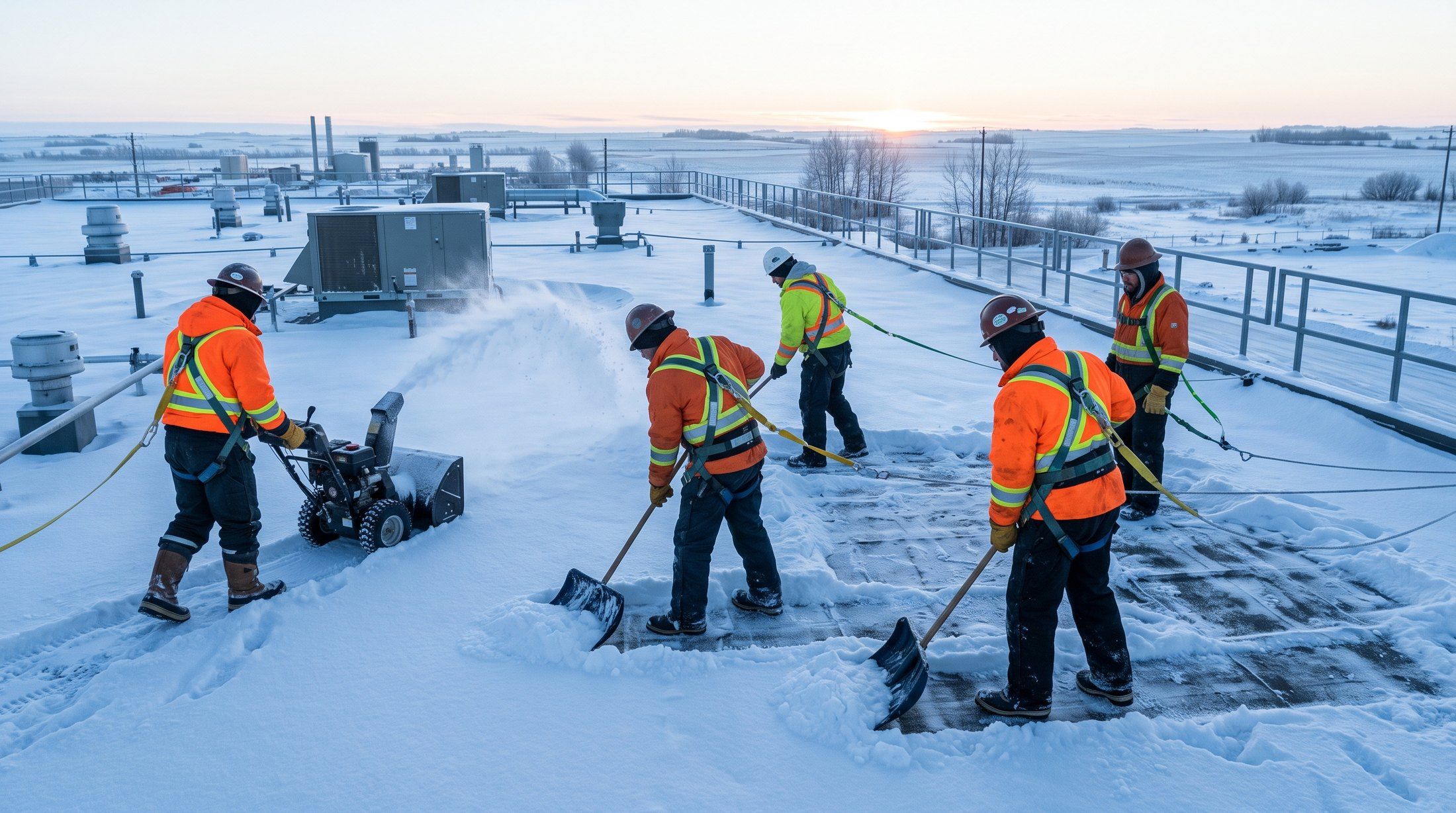
Plastic tools only, and a layer of snow left on the roof so nothing touches the membrane.
Service
Heavy snow and drifting can push a flat roof toward its limits. Our crews remove it safely, keep the membrane intact and clear the drains for the next thaw.
Overview
Roof snow removal in Edmonton is not a job for a general labour crew with steel shovels. The snow is sitting on a membrane that is easy to cut, around equipment that is easy to damage, at a height where a fall can be fatal. Done wrong, snow removal causes the leaks that show up in March, and the damage it causes is often excluded from manufacturer warranties. A long Edmonton winter with repeated snowfalls and drifting can call for more than one visit.
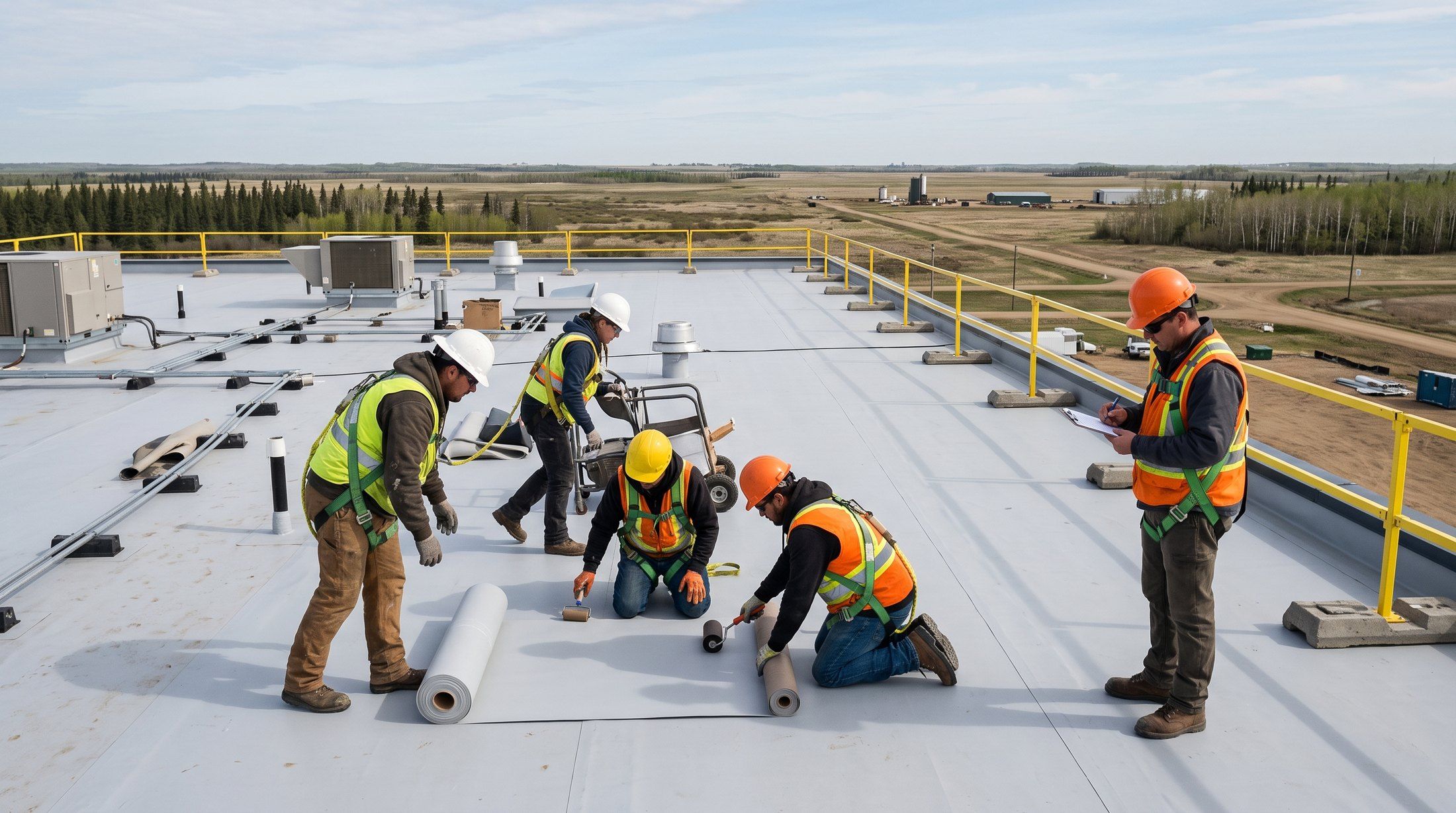
Our crews are roofers. They know where drains, seams and penetrations sit under the snow, they work with fall protection, and they leave a protective layer so tools never touch the membrane. It is one more way we look after a roof for its whole life, through the season that tests it hardest.
Plastic tools only, and a layer of snow left on the roof so nothing touches the membrane.
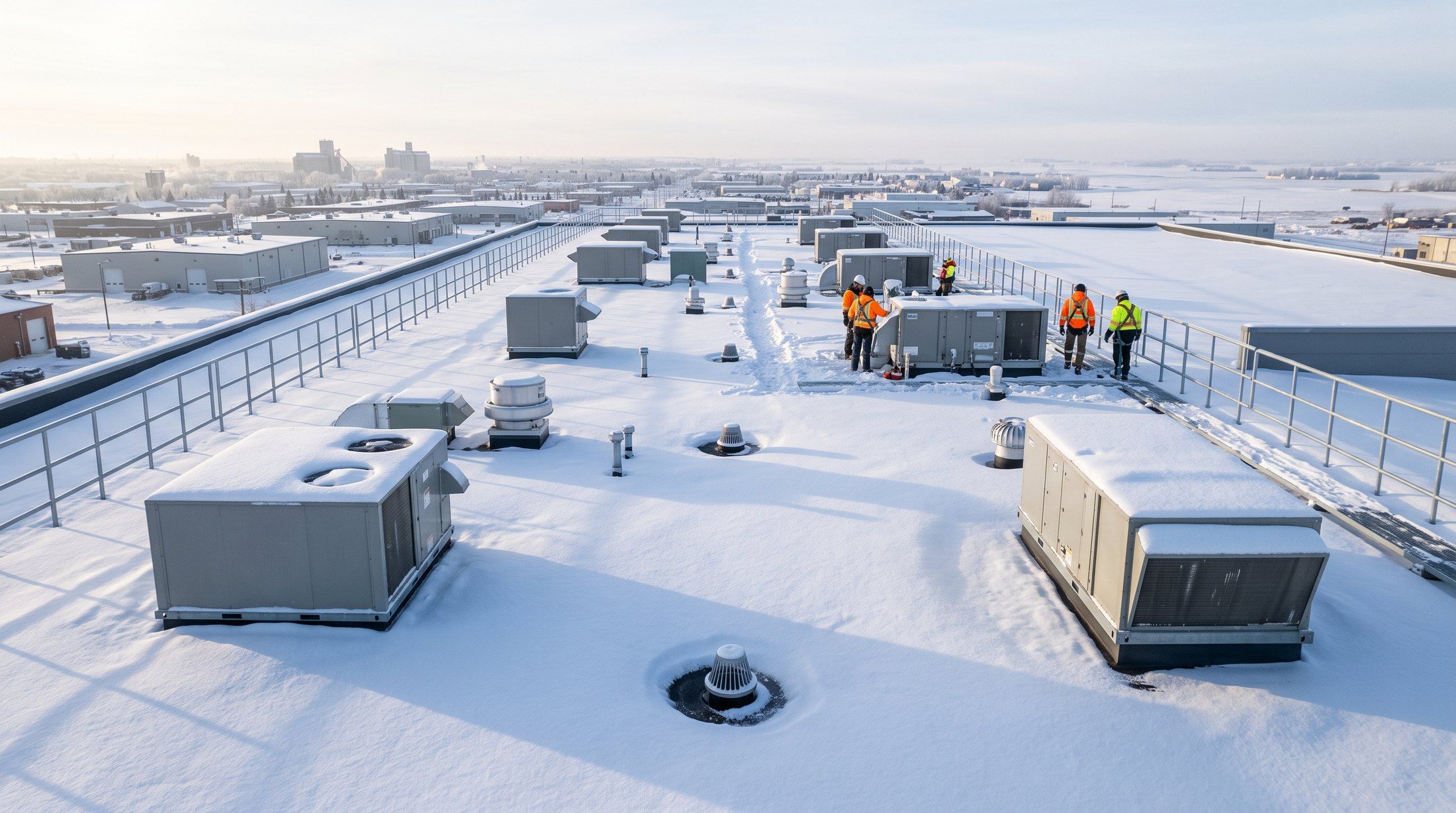
Drifts at parapets, higher walls and rooftop units are cleared first.
Drains and scuppers are dug out and cleared of ice so melt water has somewhere to go.
Fall protection, ground control and COR-certified safety practices on every call.
Every roof is designed for a snow load set by the building code for its location and shape. Problems start when actual loads exceed that: deep drifts against parapets or a higher building, snow slid from an adjacent roof, rain falling on existing snow, or ice building up around blocked drains. Older buildings and those with added rooftop equipment can have less margin than owners assume.
If you see signs of structural distress, move people out of the area and call a structural engineer before anyone goes on the roof. For routine removal, the aim is to reduce load without damaging anything. We use plastic shovels and push tools, leave a layer of snow over the membrane, keep well clear of seams, flashings and penetrations, and avoid chipping ice off the surface. Snow is moved to designated drop zones with the ground area barricaded.
Removing snow unevenly can be as risky as leaving it, so we work in balanced passes. Drains and scuppers are cleared last, so melt water from the work has a path off the roof.
Even careful removal, and especially removal by others, can leave punctures. When the roof is clear in spring, our inspection checks for damage from the winter so it is repaired before the summer storms. If another contractor cleared the roof, tell us, and we will look closely at the areas they worked.
After a major snowfall, every building in the region wants its roof cleared at once. Owners with a seasonal agreement are already on our list, with their roof plan, drop zones, access instructions and any known problem areas on file. We set a trigger with you in advance, such as a snow depth or a forecast rain-on-snow event, so nobody has to make the call from the ground in the middle of a storm.
For buildings with a history of heavy drifting, we can also recommend longer-term changes, such as relocating rooftop equipment that traps snow or improving drainage so melt water does not refreeze around drains.
Process
We check snow depth, drifts, ice, drain locations and rooftop equipment, and set up fall protection and a ground exclusion zone.
We decide where snow will be removed first, where it can go and how to avoid creating new heavy piles on the roof.
Snow is removed evenly, drifts first, without loading one area while clearing another.
Ice is broken away carefully at drains and scuppers so melt can drain.
Once the membrane is visible near drains and equipment, we look for damage and send you photos of what we cleared and found.
Questions
When snow is unusually deep, drifts have built up against walls or parapets, a rain-on-snow event is forecast, or you see any sign of structural distress. A structural engineer can give you guidance specific to your building.
We do not recommend it. Roof work needs fall protection and training, and metal tools or full clearing can damage the membrane. Damage from snow removal can also affect your roof warranty.
No. We leave a protective layer over the membrane. The goal is to reduce load, not to expose the roof surface to tools.
Yes. Seasonal agreements give you priority after major snowfalls, when demand is highest. We keep your roof plan and access details on file.
Into a designated drop zone on the ground, agreed with you in advance and barricaded while we work. We avoid parking areas, entrances, landscaping and equipment, and we never pile it in one spot on the roof.
Yes, where the membrane is visible around drains and equipment. Anything we find goes in our report with photos, and a full inspection follows in spring.
Keep reading
Service
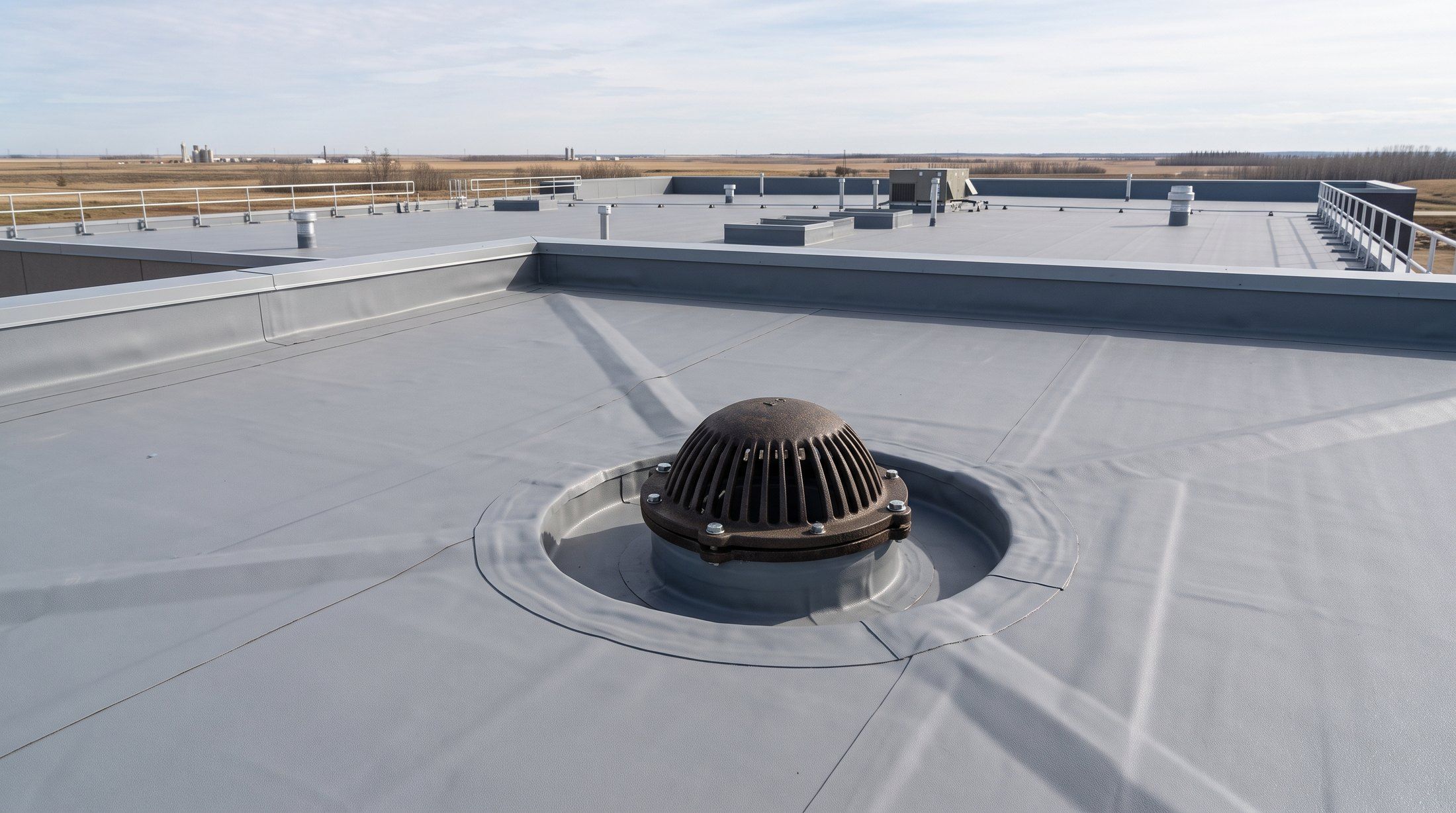
Ponding corrected with drains, scuppers, tapered insulation and crickets, built for Edmonton's freeze-thaw.
Service
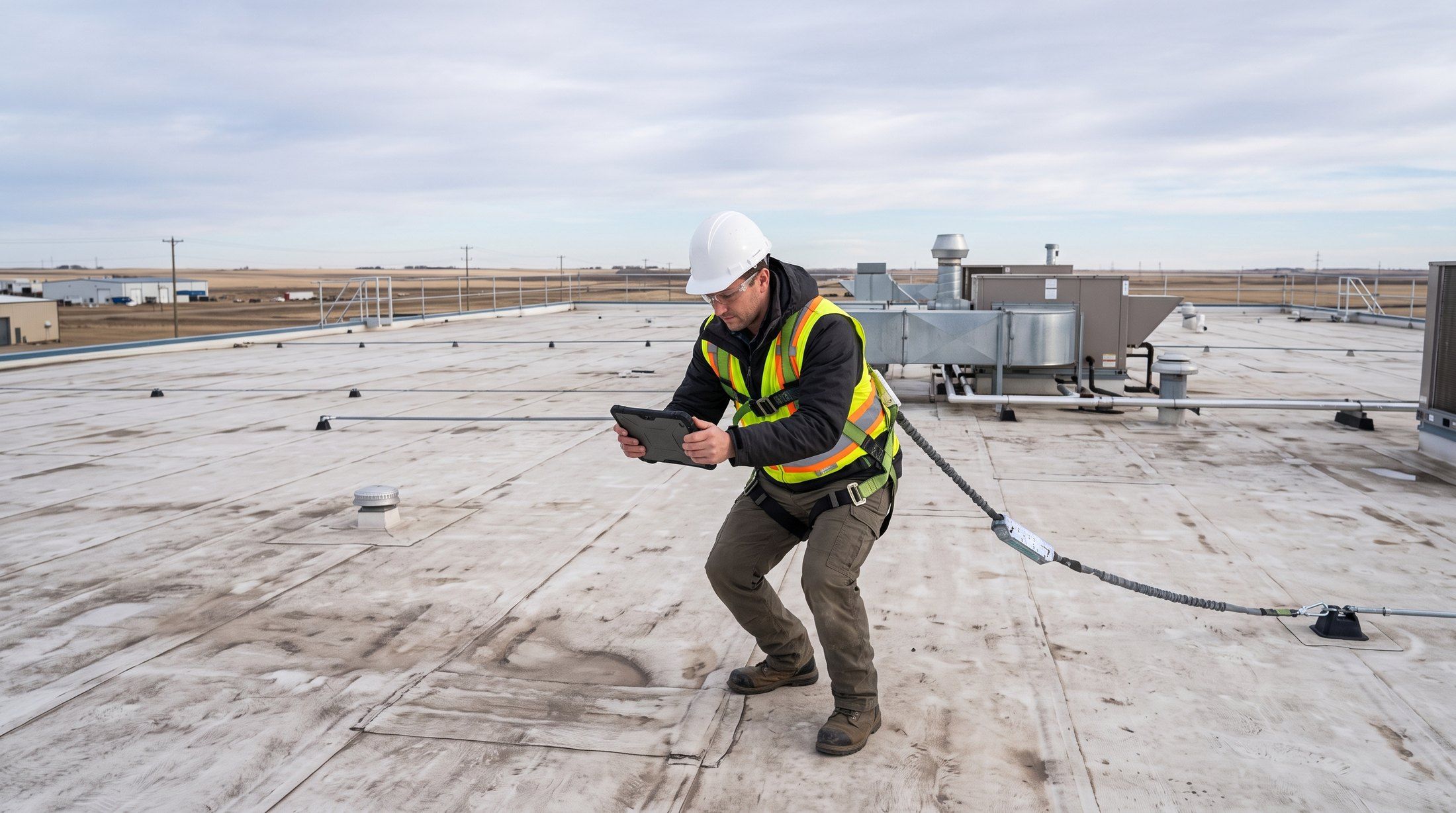
Spring and fall inspections, minor repairs on the spot and a photo report for every visit.
Safety
Our safety program, prequalification status and the documents available on request.
Send us drawings, a spec or just an address. You get a clear scope, a written warranty and a roofer who answers the phone in a storm.