Site-ready
Prequalified through ISNetworld, Avetta and ComplyWorks.
Service area: Fort Saskatchewan and the Heartland
Canada's largest hydrocarbon processing region sits on Fort Saskatchewan's doorstep. Its buildings need roofers who can pass the gate.
Local roofing
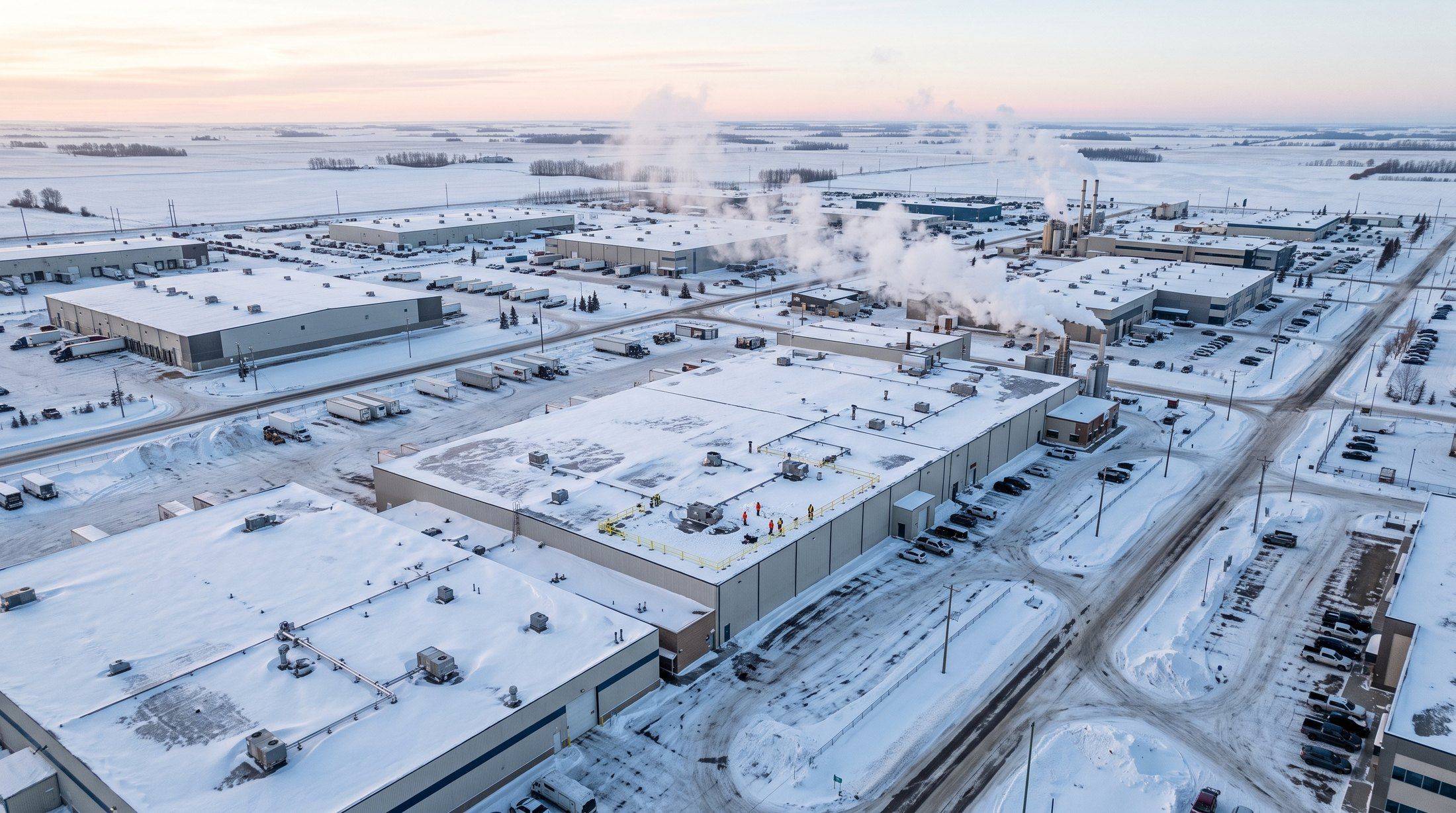
Commercial roofing in Fort Saskatchewan covers two very different kinds of work. Inside the city, it is plazas, offices, shops and public buildings. Around it, Alberta's Industrial Heartland covers 582 square kilometres and is Canada's largest hydrocarbon processing region, with control rooms, warehouses, shops and offices on industrial and petrochemical sites.
Rain Roofing works on both. On site, we roof the buildings, not the process equipment, and we arrive prequalified and ready for orientation.
Prequalified through ISNetworld, Avetta and ComplyWorks.
Plazas, offices, shops and public buildings in Fort Saskatchewan.
Permit-ready crews, or flame-free systems where sites require them.
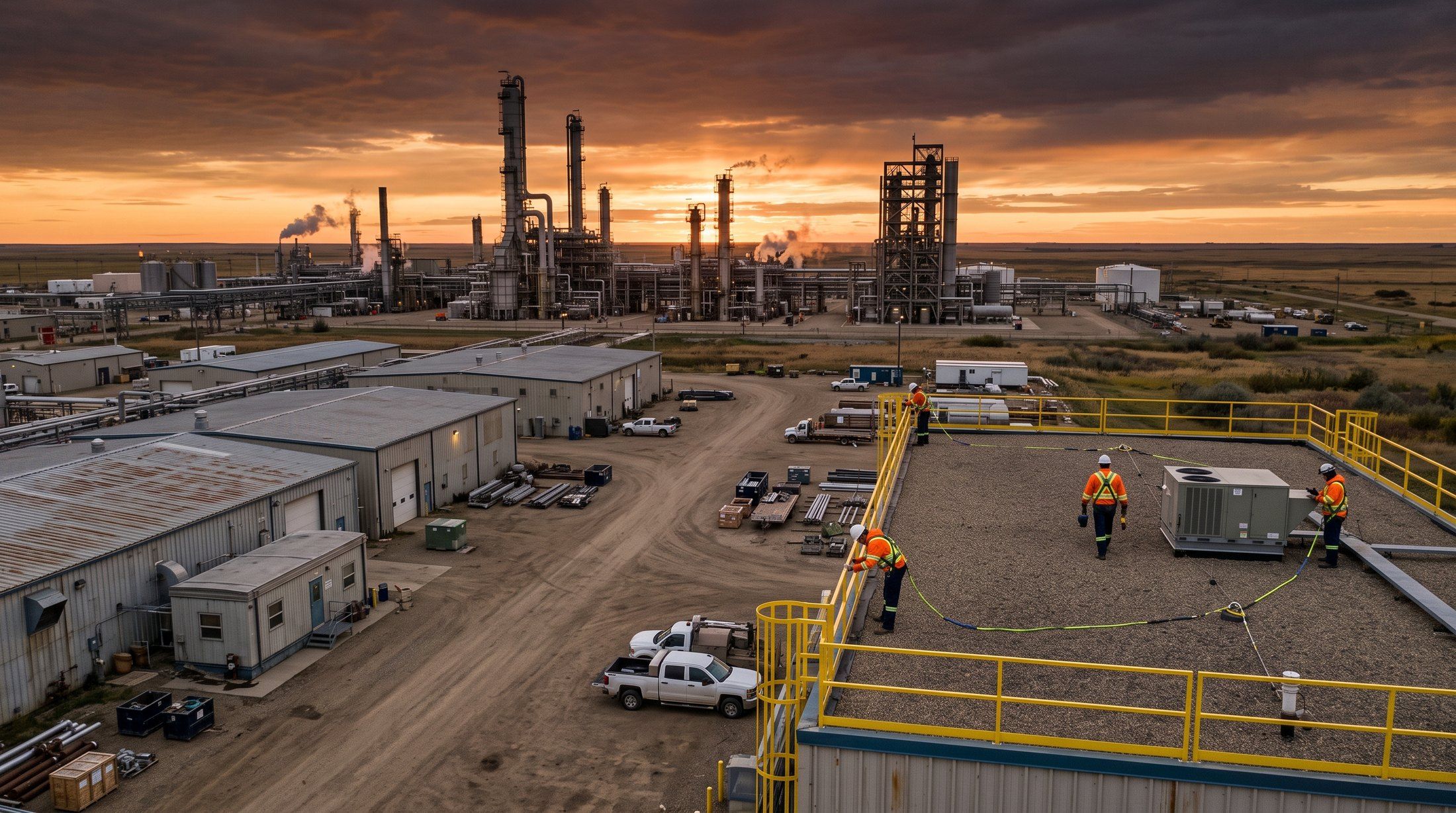
On a Heartland site, the paperwork comes before the roof. Owners and general contractors prequalify trades through ISNetworld, Avetta or ComplyWorks, ask for a Certificate of Recognition and a WCB-Alberta clearance letter, and run every hot work job through a permit system.
Rain is registered on all three platforms, holds COR through the Alberta Construction Safety Association, and carries liability insurance with a hot-work endorsement. Our crews complete site orientation before the first day of work, and we plan for gas testing, fire watch and the site's own working hours. The buildings we roof on Heartland sites usually fall into a few groups:
SBS 2-ply is a common choice on site buildings for its toughness in the cold and resistance to impact. Where a site restricts open flame, we use cold-applied or self-adhered SBS, or heat-welded PVC and TPO. Buildings exposed to chemical fallout often suit PVC. We confirm the site's rules before recommending anything.
In town, the roofs look like the rest of the region: retail plazas, offices, shops, schools and recreation buildings, mostly on SBS, built-up or single-ply systems. Many of the city's businesses serve the Heartland and work to the same safety standards, so the same prequalification often matters here too.
Common calls are spring leaks at drains and flashings, hail damage after summer storms, and replacements on roofs that have been patched for years. On a roof that has had a decade of patches, a moisture survey is often the first step: it shows how much of the insulation is wet and whether repair still makes sense.
Winter is the main risk to roofs here, as everywhere in the region. Snow drifts against parapets and penthouses, ice blocks drains, and freeze-thaw opens up seams. A fall inspection before the snow arrives, with drains cleared and flashings sealed, prevents most of the spring leak calls we get. Where drift loads build up, our snow removal crews clear targeted areas without damaging the membrane.
Our 24/7 emergency line covers Fort Saskatchewan and the Heartland, with crews on site within 4 hours where gate access allows. For industrial sites, we follow the owner's after-hours entry procedure and can have a crew already oriented to your site when needed.
Questions
If our crews are already oriented to your site, yes. Otherwise orientation is the first step, and we schedule it ahead of the start date so it doesn't hold up the work.
We roof buildings: control rooms, warehouses, shops, offices and similar structures. Process equipment, tanks and piping are outside our scope.
Cold-applied and self-adhered SBS systems avoid the torch, and heat-welded single-ply membranes use hot air instead of a flame. We confirm with your safety team which is allowed.
Yes. Retail plazas, offices, shops and public buildings in Fort Saskatchewan are a regular part of our work.
Keep reading
Service areas
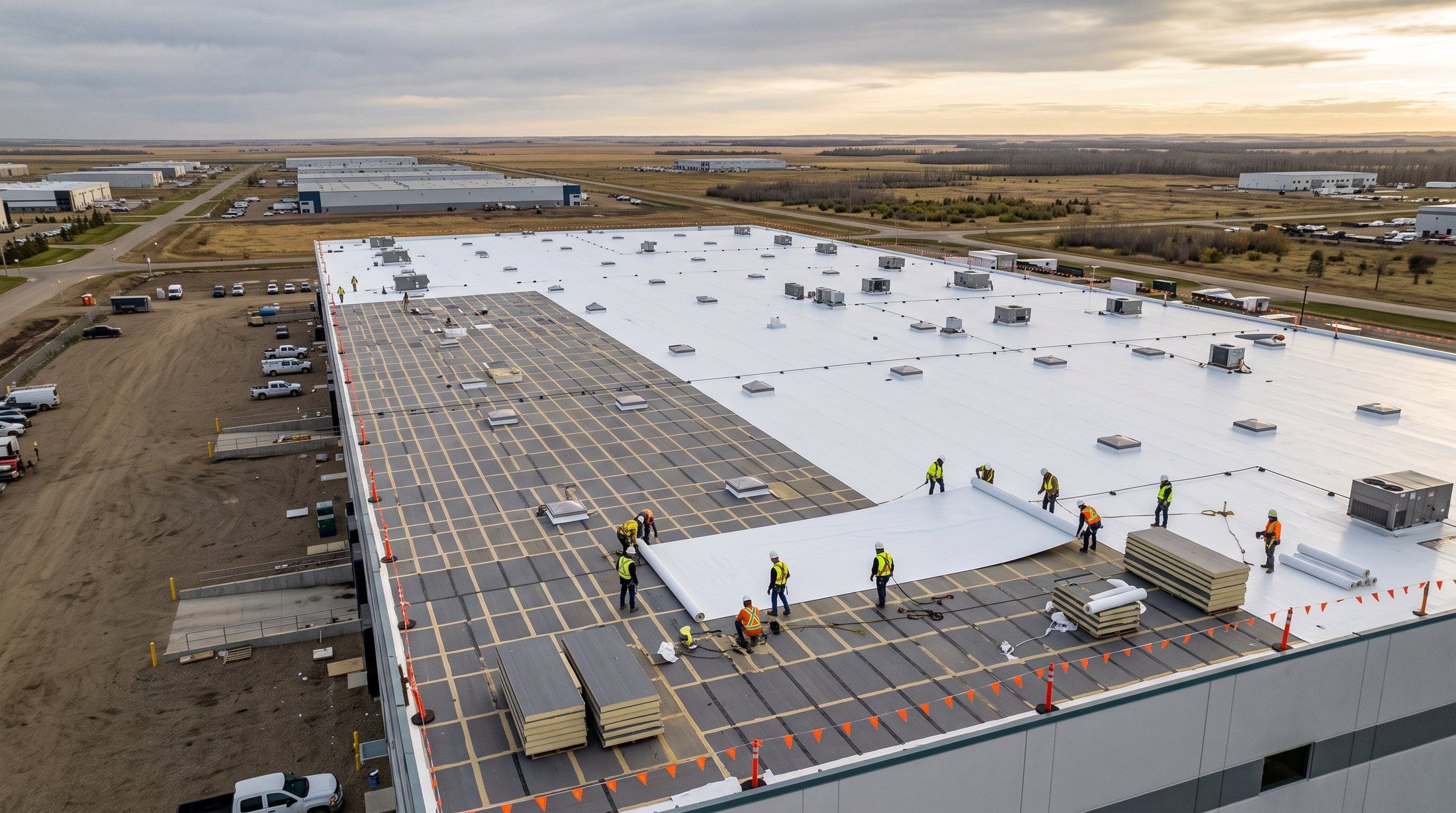
Where we work: Edmonton and the surrounding industrial and commercial areas.
Industry: oil, gas and petrochemical
Roofs for support buildings at Heartland and Nisku industrial sites, with prequalification and permits in order.
Safety
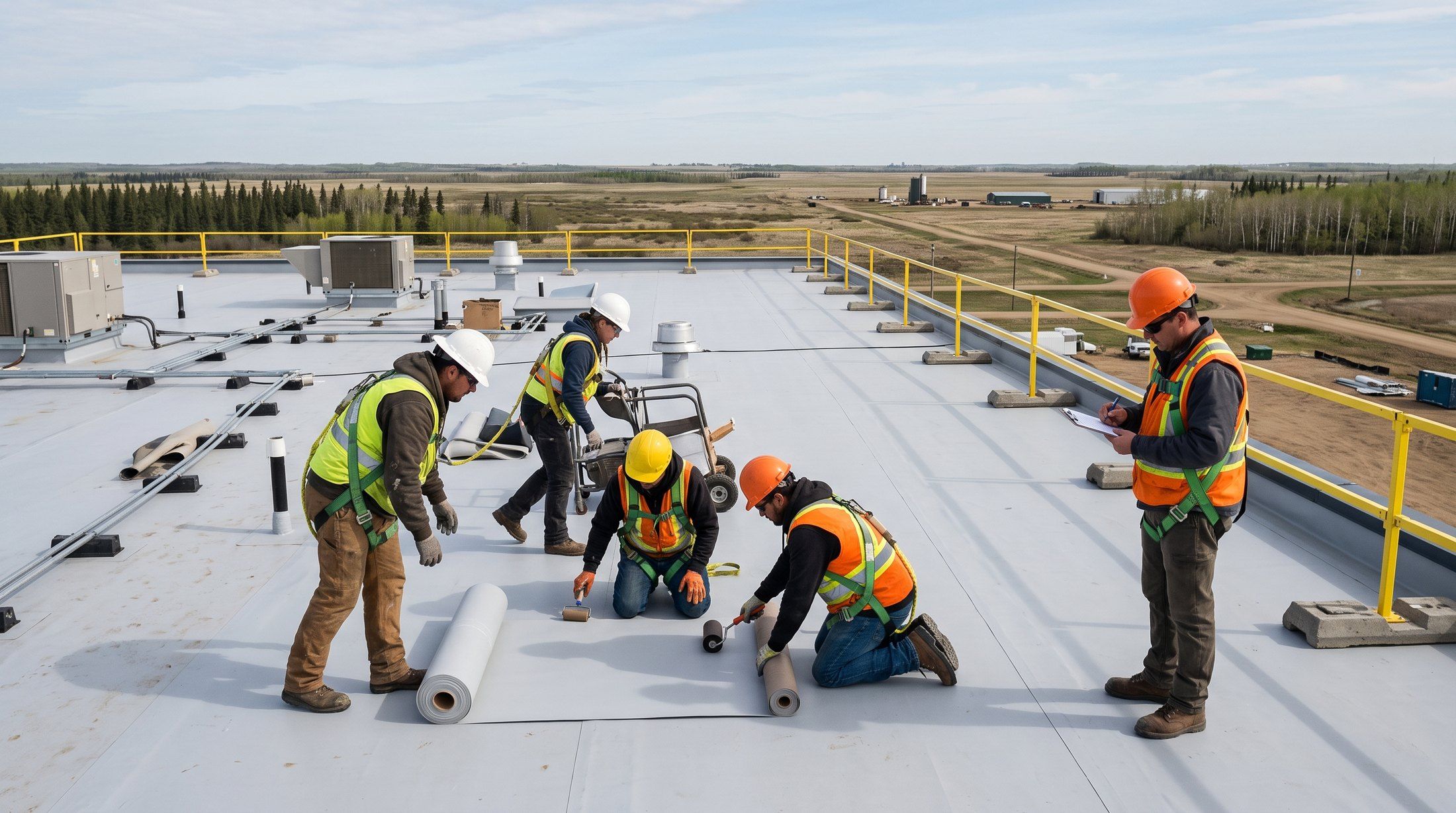
Our safety program, prequalification status and the documents available on request.
Send us drawings, a spec or just an address. You get a clear scope, a written warranty and a roofer who answers the phone in a storm.