Welded seams
Properly welded TPO seams are often stronger than the sheet itself, with no adhesive to fail.
Flat roof system
A single-ply thermoplastic sheet with heat-welded seams. Quick to install on large, open roofs, with some trade-offs worth knowing in a cold climate.
Overview
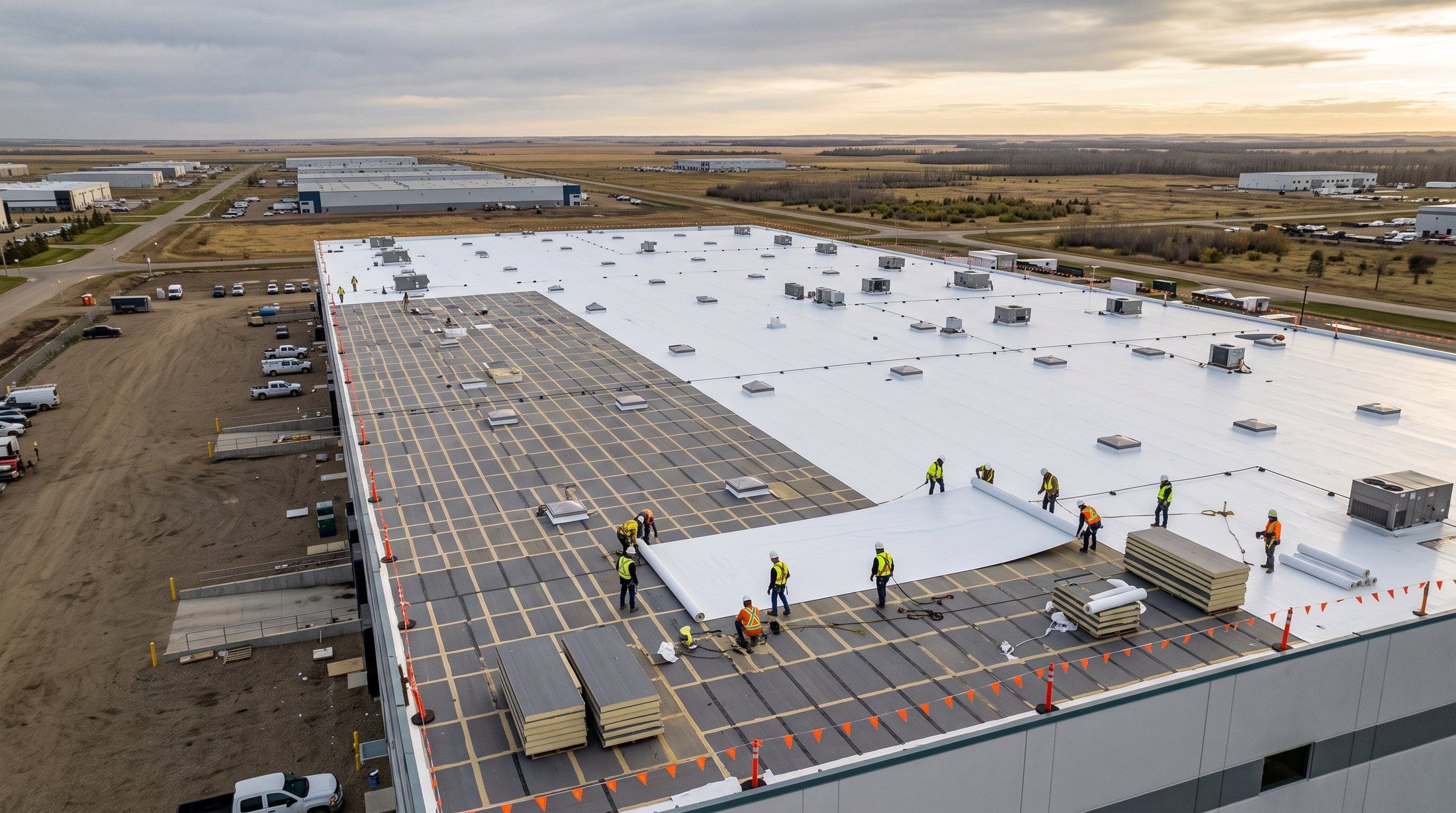
TPO roofing is the fastest-growing commercial flat roof system in Edmonton's new industrial parks. TPO (thermoplastic polyolefin) comes in wide rolls, usually white, and the seams are fused with hot air so the overlaps become one continuous sheet of plastic. On a large, simple distribution building, that means fewer seams and a shorter install than a multi-ply system.
It has a shorter track record than SBS or EPDM, and early formulations had problems that today's products have largely solved. Chosen for the right building, at the right thickness, it is a sound roof. Rain Roofing installs TPO from Carlisle and GAF.
Properly welded TPO seams are often stronger than the sheet itself, with no adhesive to fail.
Wide rolls and robotic welding cover large, open roofs quickly, which helps tight construction schedules.
Manufacturers offer system warranties up to 25 or 30 years on qualifying assemblies.
TPO is a single reinforced sheet, usually 45, 60 or 80 mil thick (a mil is a thousandth of an inch). It does not rely on bulk for waterproofing the way a 2-ply system does, so the quality of the welds and the board under it matter more.
Welding is a real advantage here. Hot-air seams can be made in cool spring and fall weather when adhesives and tapes struggle, which stretches a short install season. The membrane does stiffen in the cold, so crews handle it with care.
The white surface reflects summer heat, but Edmonton buildings spend far more on heating than cooling, and snow covers the roof for months. Treat reflectivity as a small bonus, not a reason to choose TPO. Hail is the bigger concern: thin TPO over soft insulation can fracture, so we specify 60 or 80 mil over a cover board.
TPO fits large, open roofs with few penetrations: distribution centres and warehouses in northwest Edmonton, Acheson and Nisku, and new construction where schedule drives the decision. It is also a good recover over a dry, sound roof.
It is a weaker choice on roofs crowded with rooftop units and constant trade traffic, where a 2-ply SBS roof tolerates abuse better. For heavy grease or chemical exhaust, PVC holds up better. If you want the longest local performance record, SBS and EPDM have more years behind them.
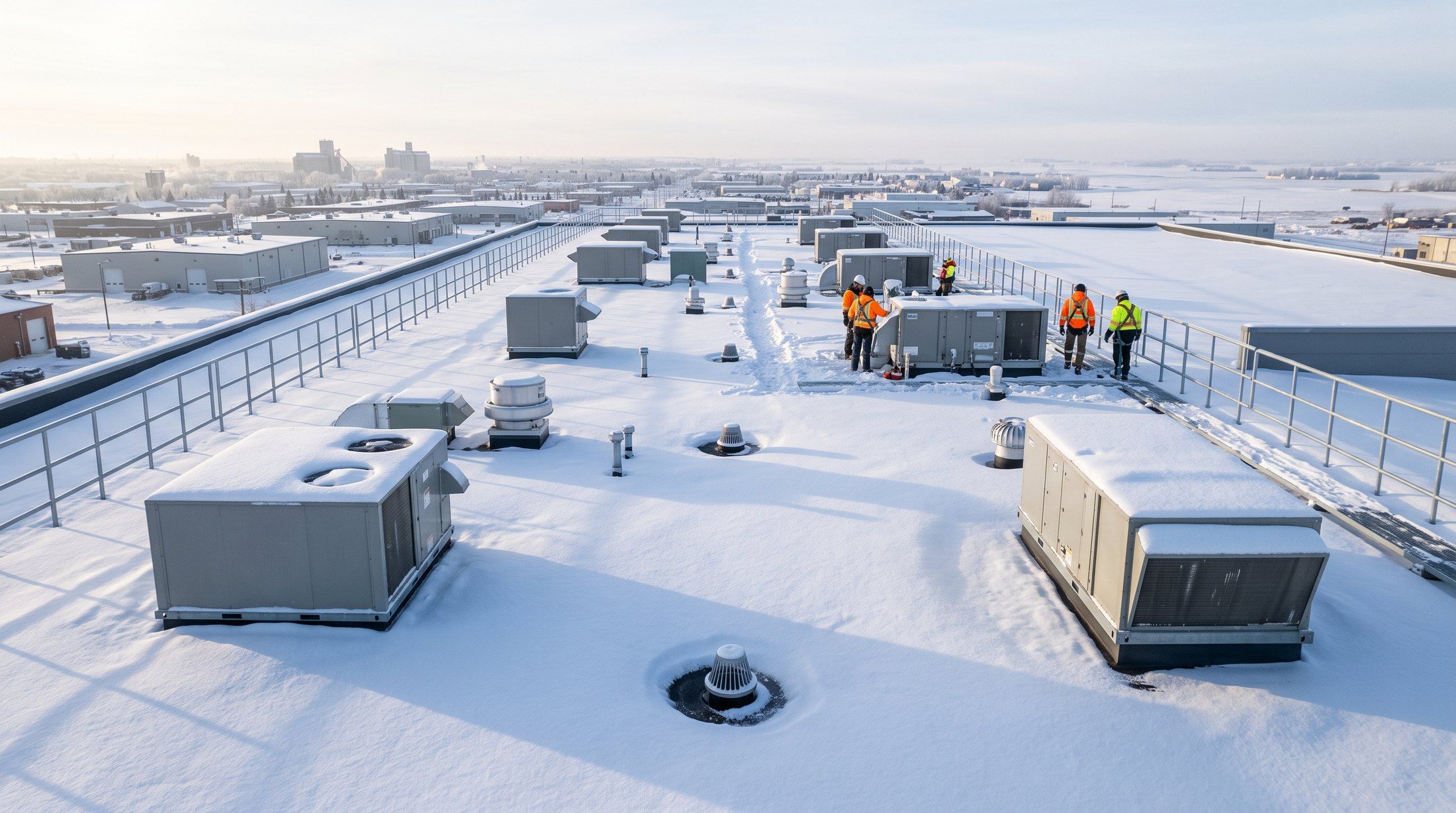
Inspect in spring and fall. Check seams at corners and T-joints, flashings at curbs, and the membrane around rooftop units, where dropped tools and screws cause punctures. Keep walkway pads in place and drains clear. Cleaning the surface keeps it reflective and makes damage easier to spot.
After any trade visit, a quick walk of the work area is worth it. Many TPO punctures come from mechanical contractors working on rooftop units, and a small hole found in a week is a simple welded patch. Found after a winter of freeze-thaw, it can mean wet insulation.
GAF and Carlisle offer TPO system warranties up to 25 or 30 years NDL, with the longest terms tied to thicker membranes, specific attachment methods and a manufacturer inspection at closeout. A Rain Roofing workmanship warranty of 10 years sits alongside it. We tell you up front which warranty a given spec qualifies for, so there are no surprises at handover.
New and mid-life TPO repairs easily: a cleaned patch is welded on and becomes part of the sheet. As TPO ages, the surface can weather to the point where new material will not weld reliably, and that is often the clearest sign the roof is near the end.
Inside the assembly
Every layer has a job. Skip one, or install it carelessly, and the roof fails early. This is the assembly we build and warranty.
Process
We confirm the deck, drains and wind zones, then lay out sheet direction and fastening patterns to suit the building.
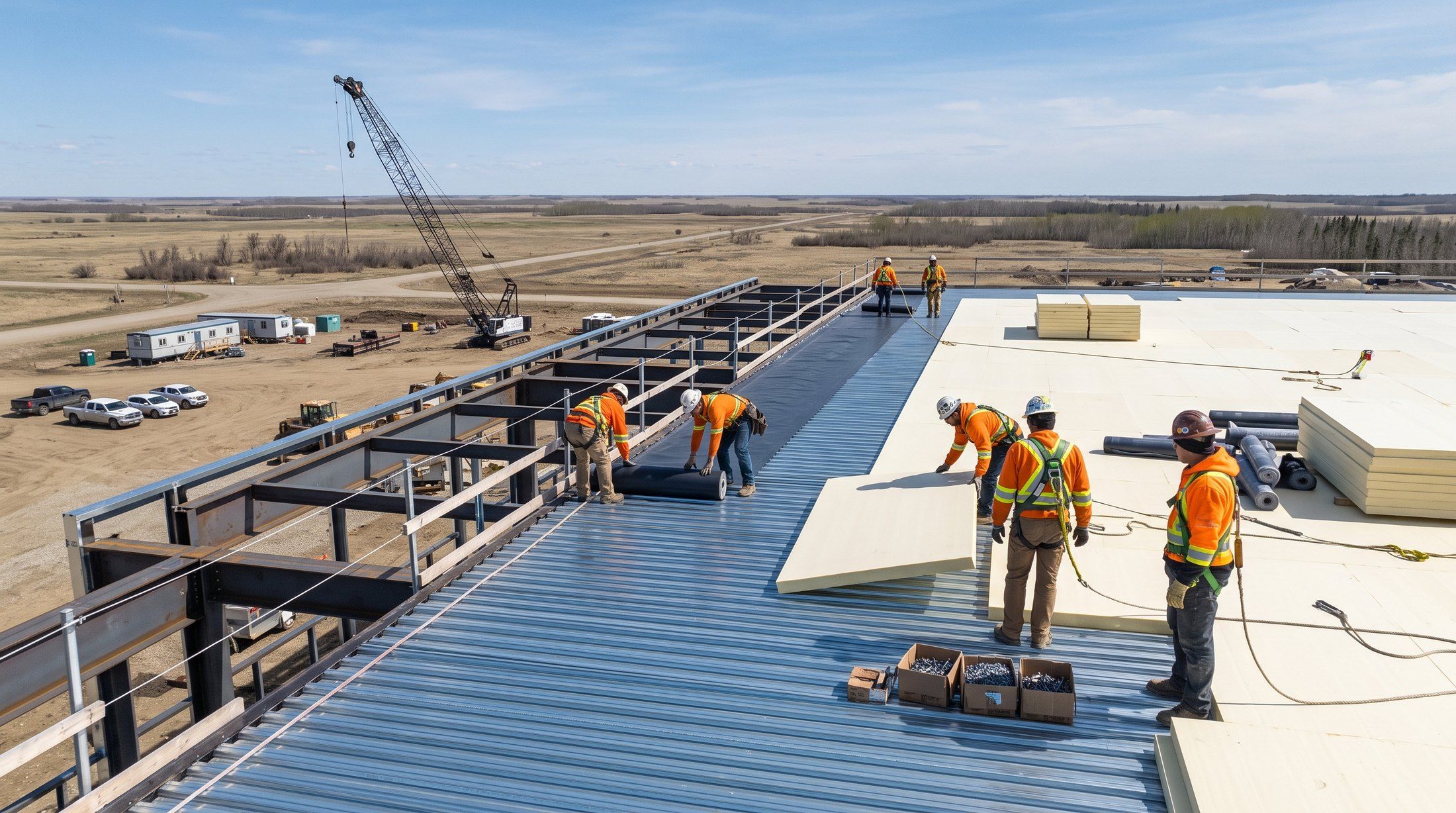
A vapour retarder, insulation and cover board are fastened or adhered to the deck, with tapered insulation where drainage needs help.
Sheets are mechanically fastened in the laps, fully adhered, or held with induction-welded plates, depending on the wind and warranty spec.
Robotic welders fuse the long seams; hand welders handle corners, curbs and penetrations. Speed and heat are set to the day's temperature.
Test welds are cut and pulled at the start of each day, and every finished seam is probed along its full length.
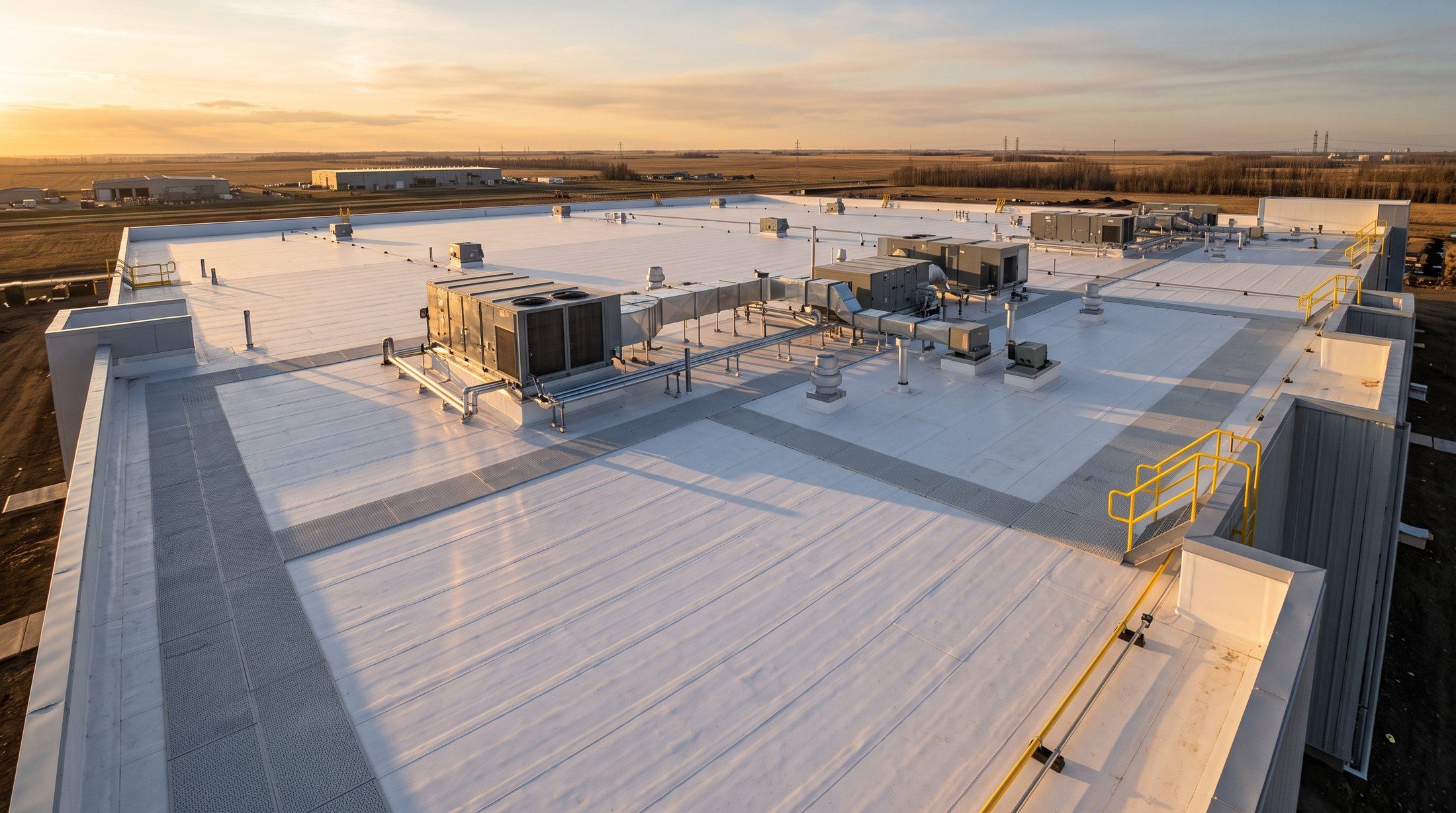
Walkway pads go in around rooftop units and access points, then the roof is inspected for the manufacturer warranty.
Warranty
Our workmanship, an independent ARCA certificate, and the manufacturer's system warranty, each backed by a different party.
Questions
On a large, open roof with light traffic, TPO often costs less and installs faster. On a roof with many units and frequent service visits, 2-ply SBS usually wears better. We price both when the building could go either way.
It does no harm, but the energy savings in Edmonton are modest because heating dominates and snow covers the roof for months. Choose TPO for its install speed and welded seams, not for reflectivity.
We recommend 60 mil as a minimum here and 80 mil where hail exposure, traffic or a longer warranty justify it. Thicker membranes have more material to weather before the scrim is exposed.
Usually. Older TPO needs thorough cleaning before a patch will weld. If the surface has weathered too far, we use a primed, adhered repair and talk with you about replacement timing.
Often, if the existing roof and insulation are dry. A cover board goes down first to give the membrane a clean, firm base. We confirm conditions with cores before quoting a recover.
Almost always the weld, not the sheet: dirty laps, the wrong heat for the day's temperature, or a welder moving too fast. That is why test welds are pulled every morning and every seam is probed before we leave the roof.
Keep reading
Flat roof systems
Compare every commercial flat roof system and see which one suits your building.
Service
Roofing subcontract work for GCs and owners, with complete submittals and crews that hold the schedule.
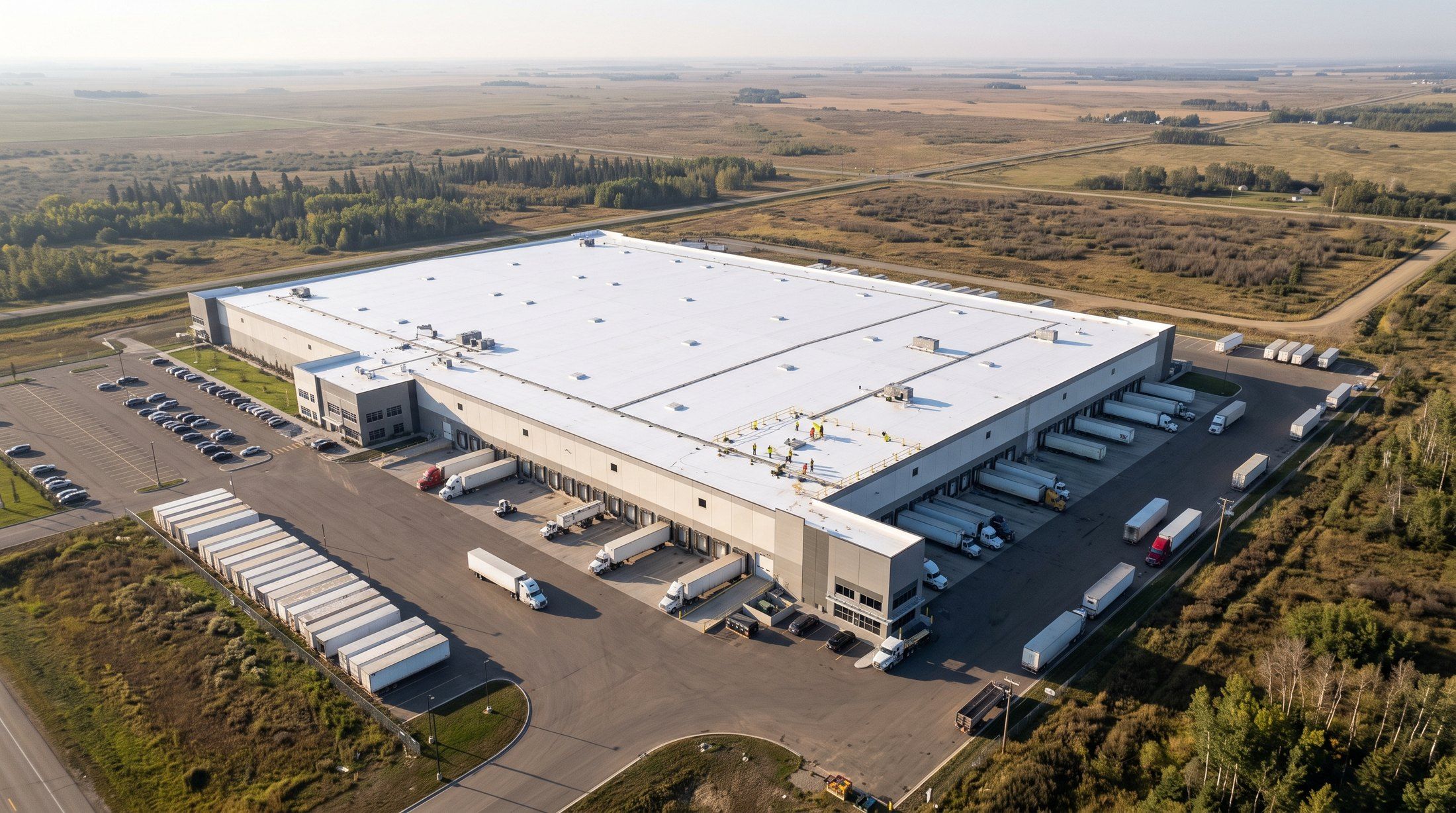
Industry: warehousing and logistics
Large-area flat roofing for distribution centres, phased around dock schedules and racked inventory.
Send us drawings, a spec or just an address. You get a clear scope, a written warranty and a roofer who answers the phone in a storm.