Zoned, phased work
Active docks and high-value inventory are never under open roof.
Industry: warehousing and logistics
Big roofs, tight dock schedules and inventory you can't move. We plan the roof around the freight.
The roof behind the operation
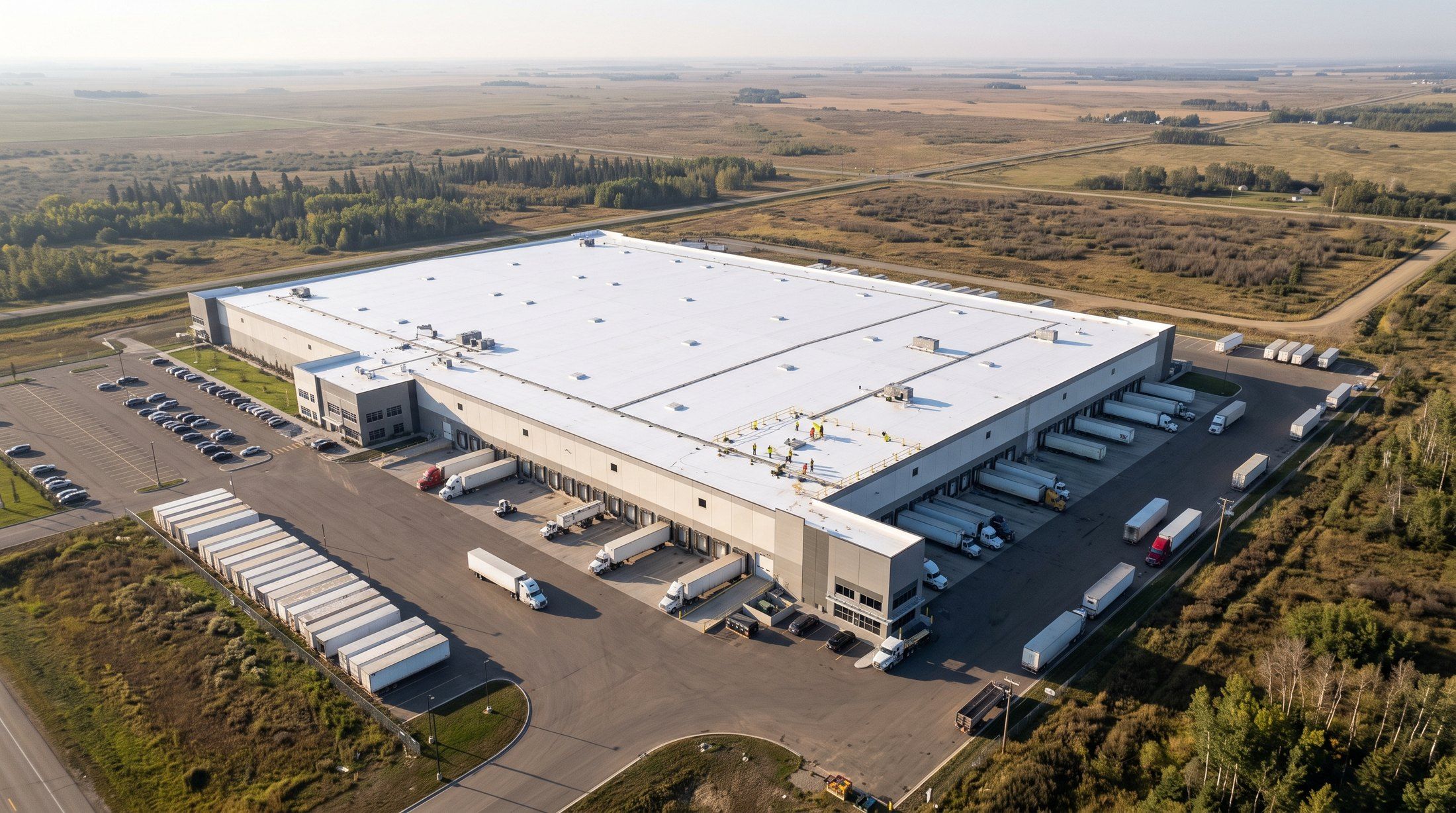
Warehouse roofing in Edmonton is a problem of scale. A single distribution building can carry several hundred thousand square feet of low-slope membrane, and almost none of it is seen from the ground. A small split at a seam near the back wall can run for months before water shows up on a pallet, and by then the insulation under it is wet across a far bigger area than the leak itself.
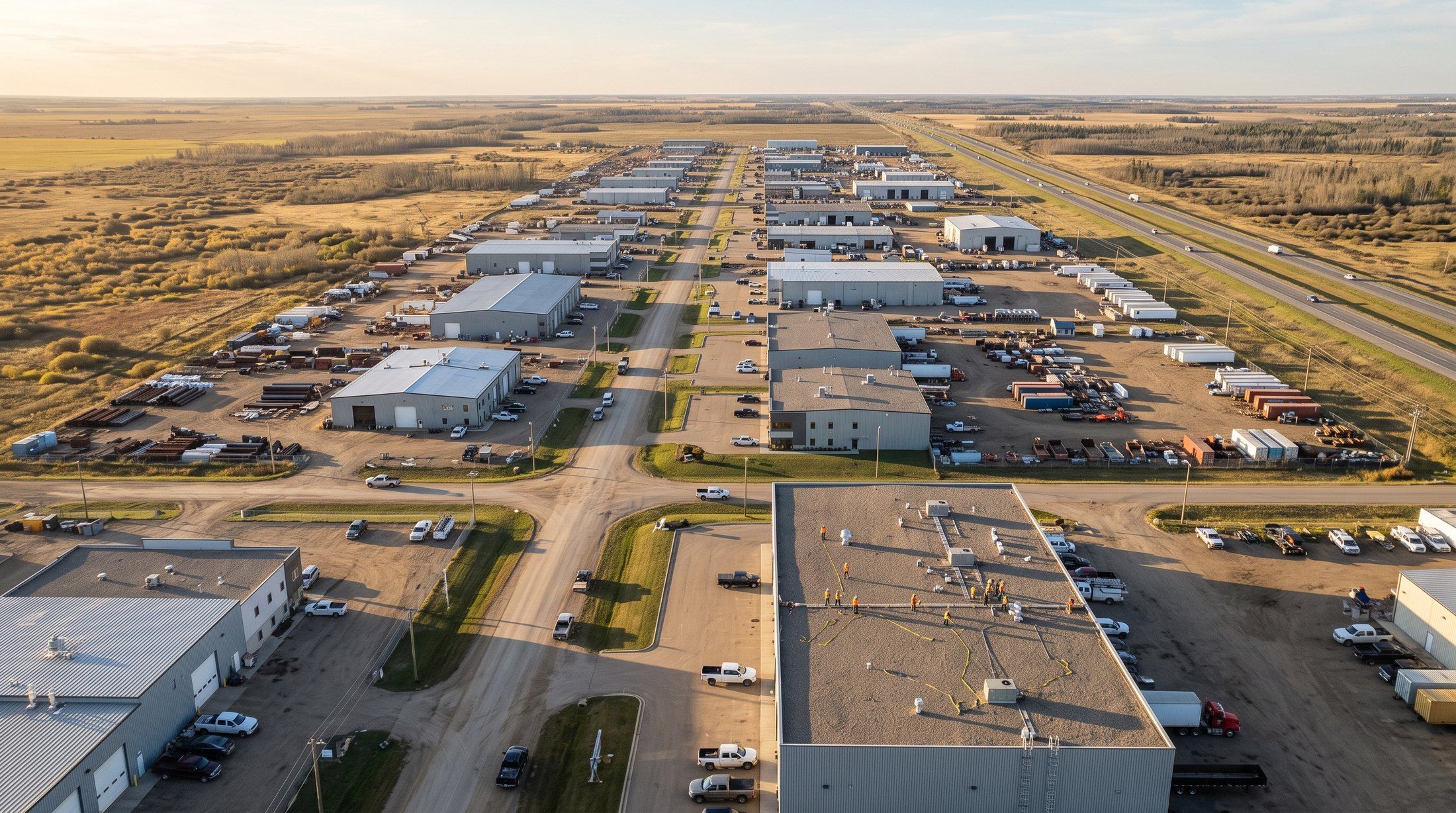
Rain Roofing works on warehouses, cross-docks and distribution centres across the Edmonton region, from the Hwy 16 corridor in the northwest to Nisku and Acheson. The goal is simple: keep the roof dry, keep the docks open, and give the facility manager a clear record of what is up there.
Active docks and high-value inventory are never under open roof.
Moisture surveys show whether a recover can replace a full tear-off.
Walkway pads and proper curb flashings where service traffic does the most damage.
Big roofs rarely fail in the open field. They fail at the details, and on a warehouse those details are predictable:
Wide roofs collect drifts against higher walls, parapets and rooftop units, and that weight can sit for weeks in a normal Edmonton winter. Drift zones are where we find crushed insulation, split membrane and drains sealed under ice.
On a building this size, a few hours of targeted snow clearing at the drift areas is often worth more than clearing the whole roof. Our snow removal crews work with plastic tools and leave a protective layer on the membrane, so the clearing doesn't cause the next leak.
The right system depends on the deck, the existing insulation, the budget and how long the owner plans to hold the building.
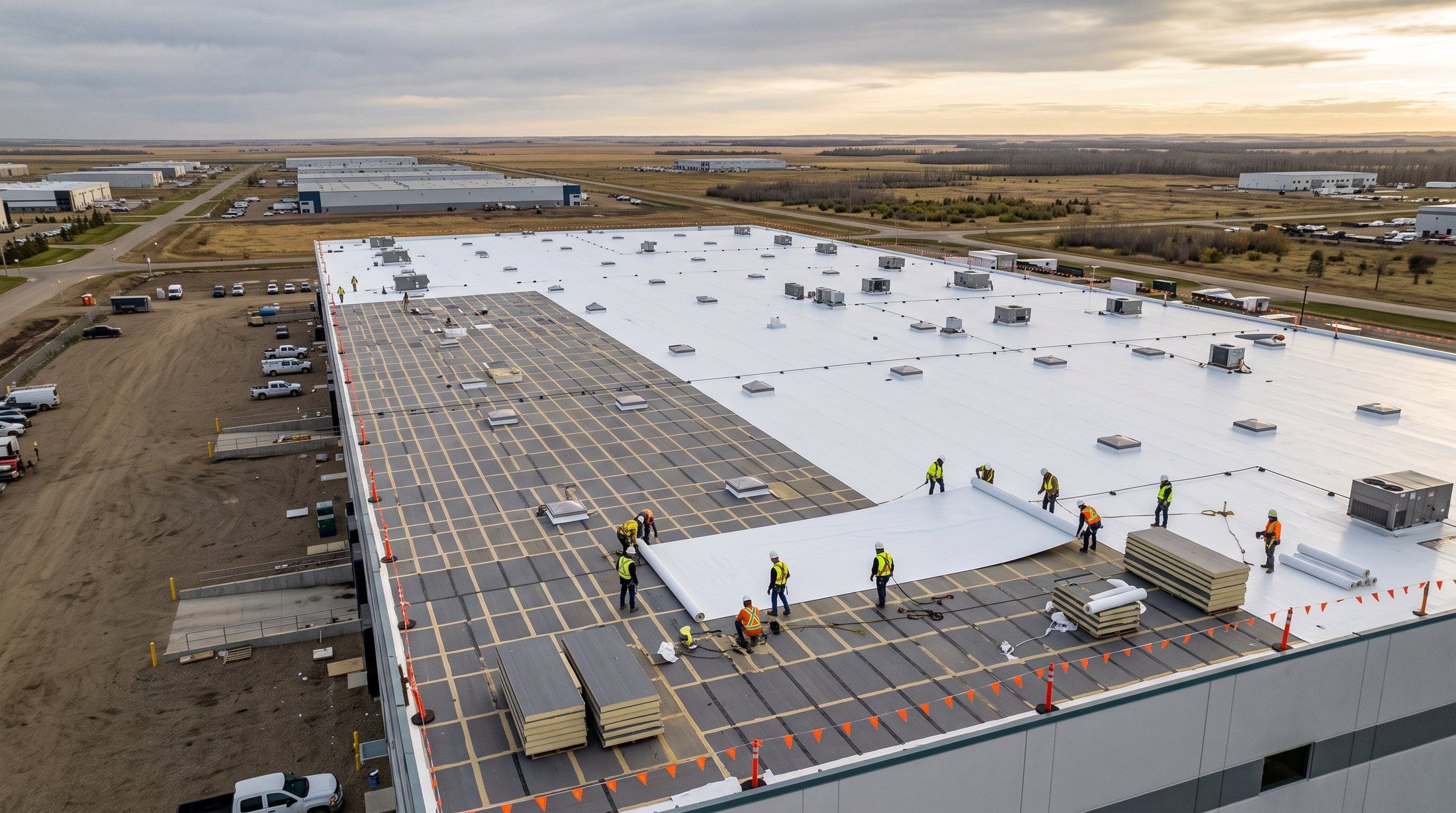
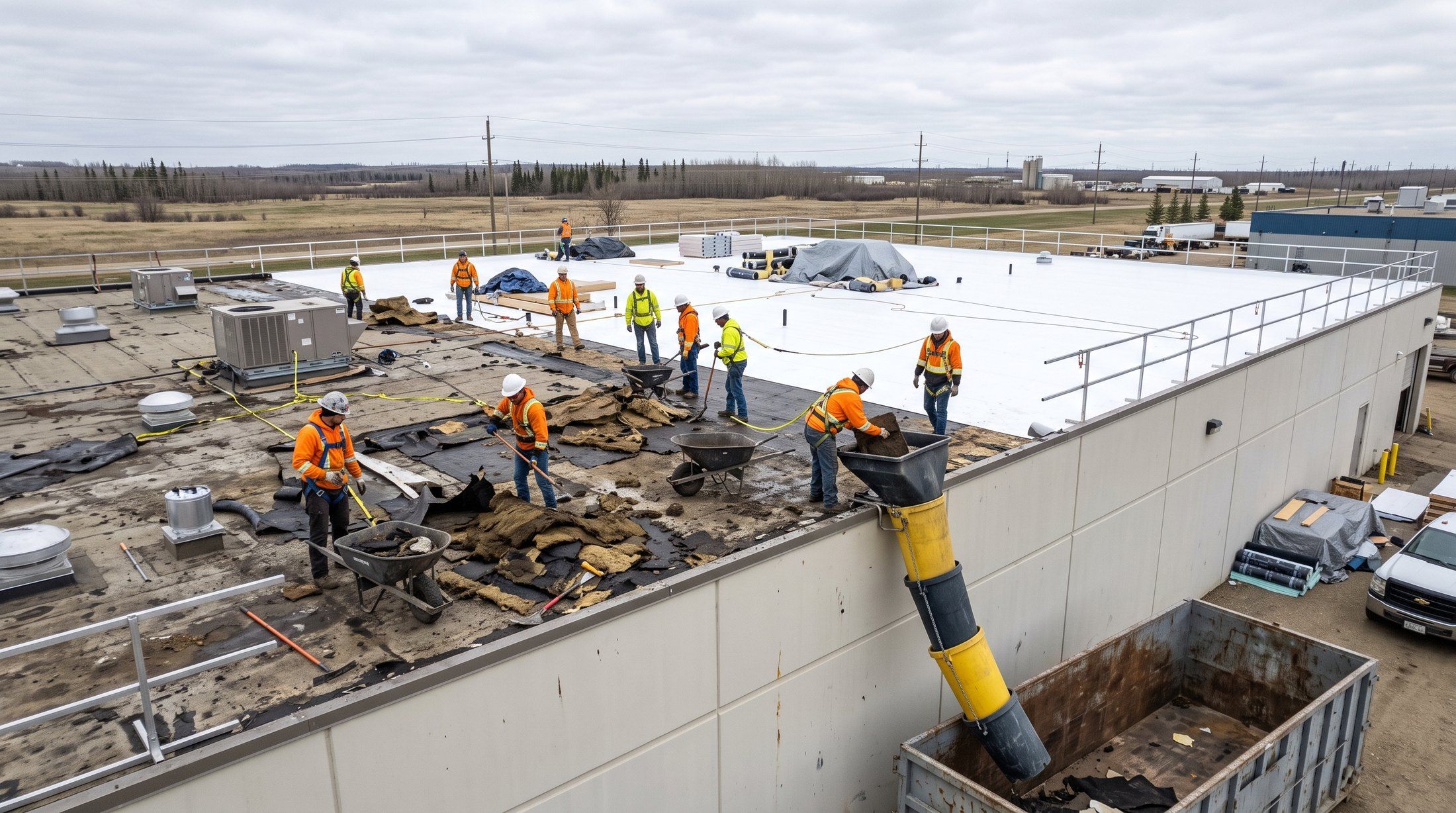
A warehouse can't shut down for a re-roof. We break the roof into zones and sequence them so active dock doors, the most valuable inventory and the busiest aisles are never under open roof.
Before we start, we walk the floor with your operations lead to map racking, sprinkler mains and anything that can't get wet. Material is craned up outside peak dock hours where we can, and staging stays clear of truck courts and fire lanes. Each zone is watertight at the end of every shift, and your site contact gets daily progress updates.
For roofs that still have years left, a spring and fall inspection program catches blocked drains, open seams and mechanical damage before freight gets wet.
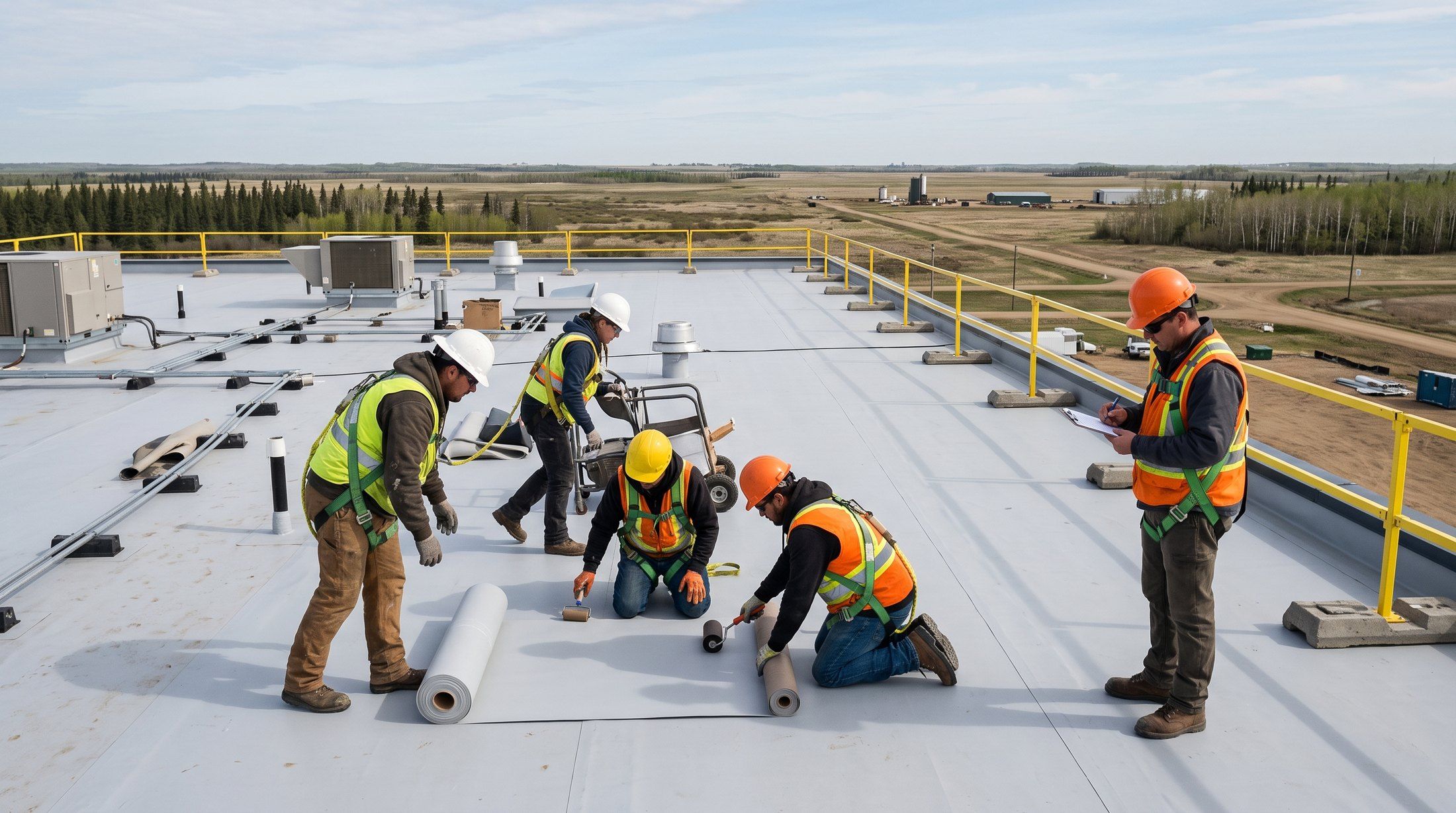
Crews on a large roof work far from the edge and right beside it in the same day. We set up guardrails, warning lines or fall arrest to Alberta OHS requirements and keep a site-specific hazard assessment on site for every job. Rain is COR-certified and carries WCB-Alberta coverage, with clearance letters on request.
At closeout you get a package your insurer and the next property manager can use: photos, a roof plan, product data and warranty documents.
Questions
In most cases, yes. We phase the work by zone and agree the sequence with your operations team before we start. Docks under an active zone stay open, and crane lifts are scheduled outside your busiest hours where possible.
It depends on the existing insulation. If an infrared or moisture survey shows it is dry and the deck is sound, a recover is often an option, and it is usually faster and less disruptive. Wet insulation has to come out first.
There are usually two or three layers: the manufacturer's material or NDL system warranty, the contractor's workmanship warranty and, on some projects, a third-party ARCA warranty. Rain issues a 10-year workmanship warranty on full replacements and explains each layer in writing before you sign.
Most leaks around units come from curb flashings, condensate lines and service traffic. We reflash curbs, add crickets on the uphill side to move water around them, and install walkway pads on service routes.
There is no single number. It depends on the building's design and the type of snow. Drifts against parapets and units are the usual concern. If you see deflection, new leaks or doors that start to stick, call a structural engineer and call us.
Keep reading
Industries we serve
How we plan flat roof work around warehouses, plants, industrial sites, institutions and retail properties.
Flat roof system
Heat-welded single-ply membrane built for large, open warehouse and distribution roofs.
Service
Full tear-off or recover over a dry roof, chosen on survey evidence and scheduled around your operations.
Send us drawings, a spec or just an address. You get a clear scope, a written warranty and a roofer who answers the phone in a storm.